
Cactus Burrito: What Nopales Taste Like & Why Try One

A cactus burrito sounds like a dare, but it is one of the most traditional meatless fillings in Mexican cooking. The flavor is far friendlier than the spines suggest.
I'll cover what nopales taste like, how to cook them without the slime, and why a nopales burrito deserves a spot on the order at a taqueria like Tacomasa.
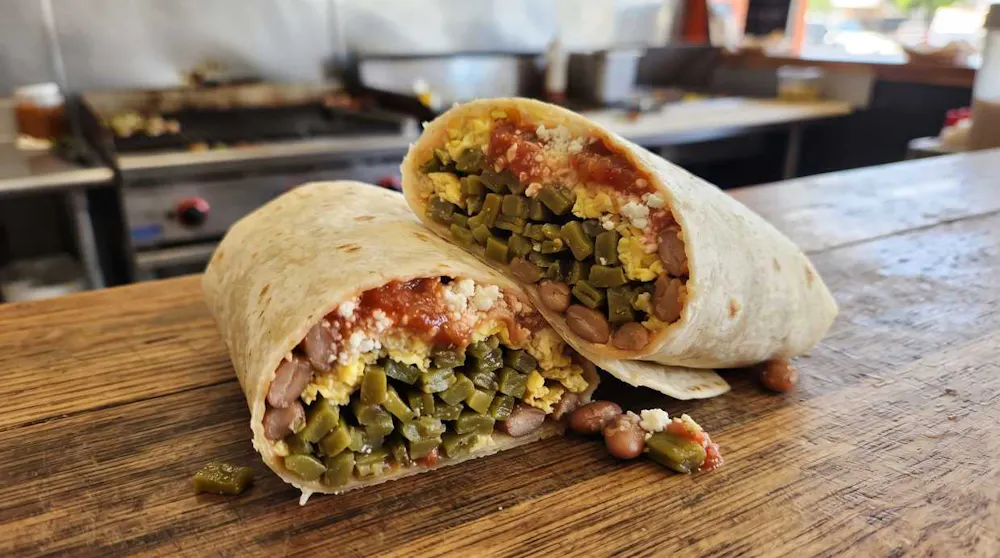
What is a cactus burrito?
A cactus burrito is a flour tortilla wrapped around cooked nopales, the edible pads of the prickly pear cactus. Cooks usually grill or sauté the pads, then add eggs, beans, cheese, or salsa. The cactus itself is a plant-based filling.
Like traditional burritos, a cactus burrito combines a flour tortilla with flavorful fillings. Learn more about the origins and characteristics of this Mexican staple in our guide to what a Mexican burrito is.
Nopales are the flat, fleshy pads of the Opuntia cactus, and the fruit that grows on them is the prickly pear. According to Chowhound, nearly every part of this edible cactus can be eaten once the spines and tiny hair-like glochids are removed.
The most familiar version is nopales con huevo, or cactus with eggs. Food writer Ericka Sanchez notes in a recipe on Nibbles and Feasts that burritos are more common in northern Mexico, where the cactus and egg version became a portable breakfast.
What do nopales taste like?
Nopales taste green, tart, and mild, somewhere between green beans and asparagus with a hint of lemon. Cooking mellows the sourness and brings out sweetness, especially when grilled. The texture is tender with a slight crunch, plus a slippery juice similar to okra.
Maria Melendez, who writes the Taste of Mexico series for Mexico News Daily, told NPR the flavor is herbaceous and the smell is like "freshly cut grass." That sounds odd, she admitted, but it turns fresh and pleasant once other ingredients join in.
Sources disagree a little on the edges. Chowhound hears lemon in raw pads, while The Novice Chef finds a tart, citrusy bite that can edge toward bitter. Smaller, younger pads taste milder and are less fibrous.
I'd describe the nopal taste as a green bean with a squeeze of lime already built in. It is mild enough to pick up whatever surrounds it, which is why salsa, cheese, and a warm tortilla work so well.
Are nopales slimy, and how do you fix it?
A little, yes. Cut pads release a clear, slippery juice called mucilage that feels like okra. Grilling, salting, or boiling with baking soda and rinsing removes most of it, and each fix is simple.
Salt them. Melendez suggests massaging the cut pieces with coarse salt before using them.
Grill them. Chowhound says cooking cuts some of the slime, and scoring pads before grilling lets water evaporate for firmer insides.
Boil with baking soda. The Novice Chef boils diced pads with 1 teaspoon of baking soda, then rinses them until the mucilage is gone.
Don't overcook. Tucson Foodie warns that pads simmered too long turn slimy.
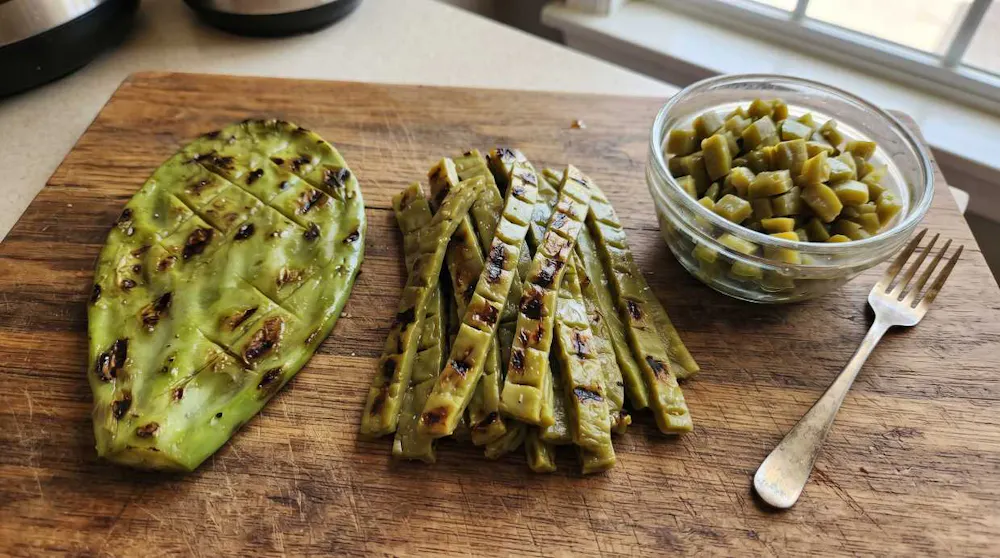
How to cook nopales for a burrito
The easiest way to cook nopales is to grill whole pads for 4 to 6 minutes per side over medium-low heat, then dice them. You can also boil diced pads for 10 to 20 minutes or sauté them for 4 to 5 minutes. I'd pick grilled cactus, since it stays firm and turns sweeter.
Here is the process, using timings from The Novice Chef and Chowhound:
Buy smart. Look for small, bright green pads that feel firm. Pre-cleaned pads save time.
Remove the spines. If the pads still have them, wear thick gloves and shave off the spines and edges with a sharp knife.
Cook. Grill whole pads 4 to 6 minutes per side, or dice and boil 10 to 20 minutes until fork-tender, or sauté 4 to 5 minutes in a little oil.
Rinse if boiled. Drain and rinse until the pieces stop feeling slippery.
Season and fold. Add salt and lime, dice, and wrap in a warm flour tortilla with your fillings.
Jarred nopalitos work too. Chowhound notes they are often marinated in vinegar and slightly salty, so rinse them first.
What goes in a nopales burrito?
A nopales burrito usually pairs the cactus with something rich to balance its tang. Sanchez's recipe sautés onion, tomato, jalapeño, and cooked cactus, then folds in scrambled eggs and cilantro before rolling everything in a flour tortilla.
Common add-ins include:
Eggs: the classic breakfast pairing.
Beans: refried or whole, for a hearty plant based burrito.
Cheese: Oaxaca or cotija add salt and richness.
Salsa: salsa verde is the traditional match, and smoky chipotle works too.
Among Mexican vegetables, cactus pads are unusually flexible. Chowhound lists them in eggs, tacos, salads, stews, and salsas.
Why try a cactus burrito?
Try a cactus burrito if you want something that tastes fresh, not heavy. The cactus brings tang and crunch, so the burrito feels lighter than a plate of meat and cheese.
Try it if you want vegetarian Mexican food that is traditional rather than a modern substitute. The cactus has been a Mexican staple for centuries, and the plant appears on the national flag.
Try it if you like a contrast. The tart, green flavor cuts through beans, cheese, and avocado.
Try it if you care about nutrition. Chowhound reports the pads supply fiber, calcium, magnesium, and vitamins A, C, and K, with little fat. Research on health benefits is still limited, so treat them as a good vegetable, not a cure.
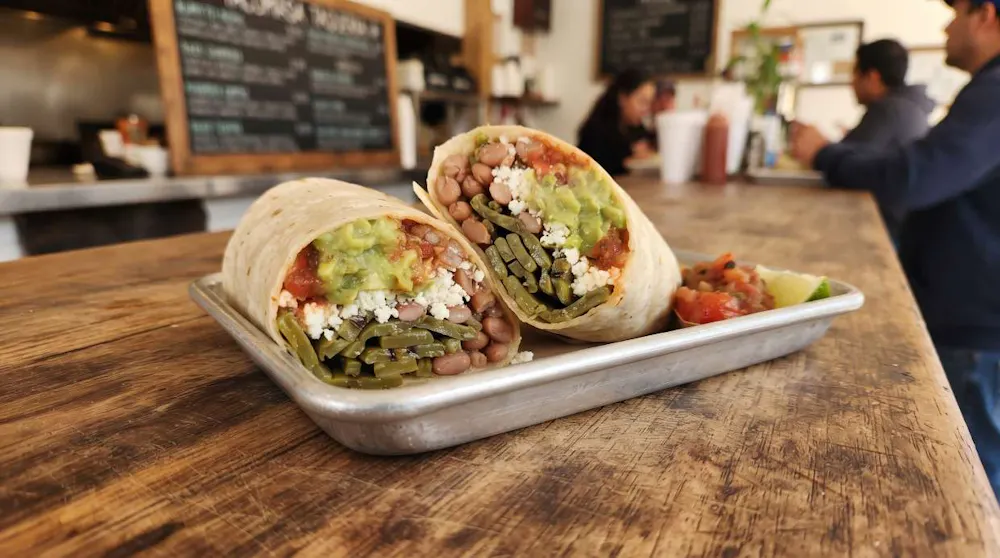
You can test the idea on a working menu. Tacomasa's menu lists a Burrito Nopal with cactus, served "con todo" with onion, cilantro, guacamole, and salsa.
The breakfast Burrito Nopal adds egg and cheese and is served 8am to 11am.
Frequently asked questions about cactus burritos
Can you eat nopales raw?
Yes, once the spines and glochids are removed. Raw pads are crunchy, juicy, slightly tart, and refreshing. Cooks slice them into salads and salsas or blend them into drinks like jugo verde, which often pairs nopales with pineapple, celery, cucumber, and parsley.
Are nopales the same as prickly pears?
No. Nopales are the pads of the Opuntia cactus, while prickly pears are the fruit that grows along their edges. The fruit is sweet and juicy, and Chowhound compares it to watermelon or kiwi. The pads taste green and tart, like a vegetable, and both parts are edible once de-spined.
Is a cactus burrito vegan?
The cactus is plant-based, but fillings decide the rest. Many versions add egg or cheese. Sanchez suggests swapping scrambled tofu for the eggs to make hers vegan. At a restaurant, ask about the beans, tortillas, and cheese before ordering, since menus rarely list every ingredient.
How long do nopales last in the fridge?
Cleaned or chopped pads keep about one to two weeks in the refrigerator, per Chowhound. Cooked pads last roughly five to seven days. They also freeze well after blanching, which helps when fresh pads are only available in spring and summer.
The bottom line on the cactus burrito
A cactus burrito is cooked cactus pads in a warm flour tortilla, with a tart, green flavor and a tender bite. Grill or salt the pads to handle the slippery texture, and pair them with beans, eggs, cheese, and salsa.
One caveat. Taste descriptions are subjective, and the sources I used disagree on how citrusy or bitter the pads get. Health research is limited too, so I've kept those claims modest.
Ready to taste one? Order online or find a location.
Feeding a crowd? Tacomasa's catering menu lets you choose nopal for its burrito packs, so see the catering page.
Curious who's behind the menu? Read more about Tacomasa.
About the author: Ivan Flores is the founder and CEO of Encinal Brands, with hands-on experience building restaurant concepts inspired by the authentic flavors and food culture of Tijuana, Mexico. His journey in the restaurant industry includes launching The Buffalo Spot and growing a family of restaurant brands, including Tacomasa. .
Last updated: October 2026