
Carne Asada vs Adobada: What's the Difference?

Carne asada vs adobada is the choice you face at almost every taqueria counter. Both land in a warm tortilla with onion and cilantro, and both are good, so the menu rarely helps you pick.
The short version: the first is grilled beef, and the second is chile-marinated pork. I'll cover what each one is, how the marinades differ, where adobada overlaps with al pastor, and what to order at a taqueria like Tacomasa.
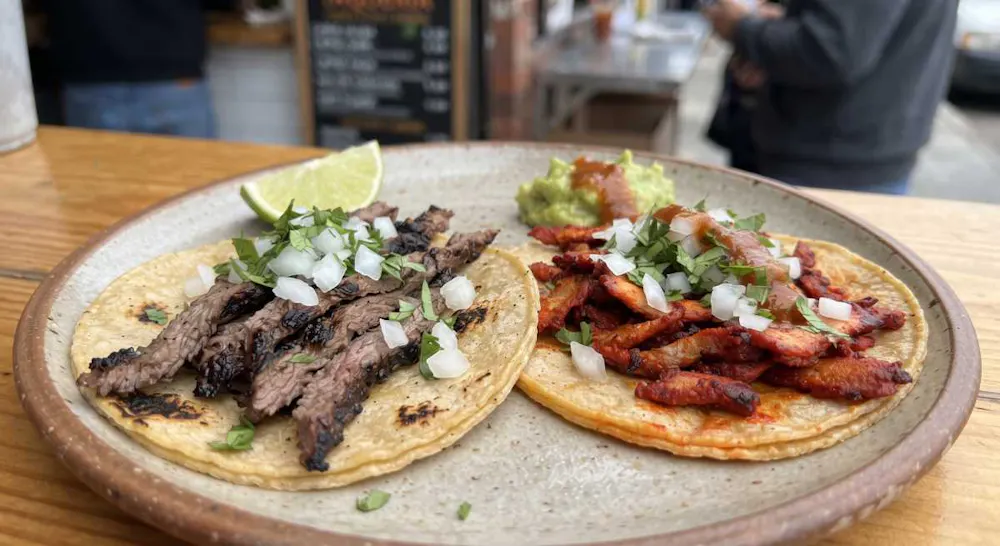
What is carne asada?
Carne asada is grilled and sliced beef, usually skirt, flap, or flank steak. The name means "grilled meat" in Spanish. Cooks marinate the steak, sear it over high heat for a charred crust, then chop or slice it for tacos and burritos.
Think of it as a steak that gets chopped for a taco. Skirt and flank are thin, long-fibered cuts, so cooks slice them across the grain after grilling to keep each bite tender, as Isabel Eats explains.
Wikipedia says the dish is believed to have started in northern Mexico, especially Nuevo León and Sonora, where ranching runs deep. It is a staple there, and the phrase can also mean a backyard cookout with family and friends.
I'd argue it is the benchmark grilled steak taco meat. Most taquerias get judged on how well they handle it.
What is adobada?
Adobada is the Spanish word for "marinated," and adobada meat in Mexican cooking is usually pork soaked in a red adobo of dried chiles, vinegar, and spices. The marinade turns the meat deep red and gives it a tangy, chile-forward flavor.
Wikipedia describes it as pork in a red chile sauce with vinegar and oregano, though it can also mean other meats. Many Mexican versions use guajillo or chipotle chiles, which can run hot.
The marinade itself is called adobo. Mexican recipes often add allspice, cinnamon, cloves, bay leaf, or nutmeg to that base of chiles and vinegar.
Don't mix it up with carne adovada from New Mexico. That dish is pork cured in red chile and baked low and slow, and Tucson Foodie also warns against confusing the two.
Carne asada vs adobada: how do they compare?
Carne asada is grilled beef with a citrus-and-seasoning marinade, while the pork version gets a vinegar-based chile adobo. Nearly every other difference follows from those two facts.
| Carne asada | Adobada | |
| Meat | Beef | Pork, sometimes other meats |
Usual cut | Skirt, flap, or flank steak | Varies by cook |
| Core marinade | Lime or other citrus, salt, Mexican seasonings; sometimes only salt | Red chile (often guajillo or chipotle), vinegar, oregano, spices |
Cooking | Grilled or seared hot, then sliced or chopped | Varies; in Tijuana, shaved from a vertical spit |
Flavor | Smoky, beefy, lightly seasoned | Tangy, red, chile-forward |
Home region | Northern Mexico (Nuevo León, Sonora) | Colima, Jalisco, Michoacán; Baja California |
Best for | Steak lovers | Pork and chile lovers |
The marinade is where they split most. Isabel Eats notes there is no single authentic marinade for it, and some are as simple as oil, salt, pepper, garlic, and lime juice.
Tucson Foodie adds that some restaurants season the beef with salt alone, while others use citrus and peppers. The pork rarely goes that minimal, because the chile adobo is the whole point.
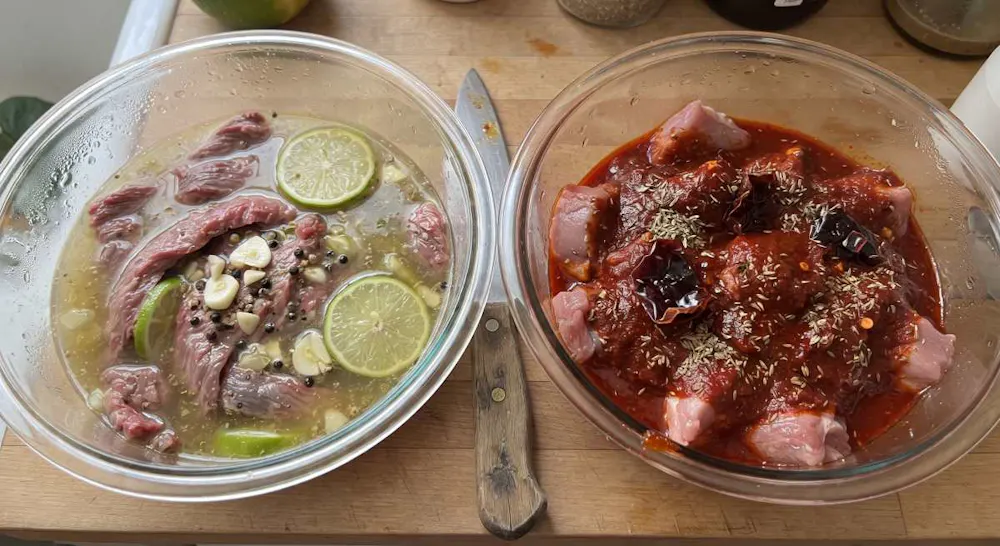
What is in a carne asada marinade, and how long should it sit?
A carne asada marinade is usually citrus juice, salt, garlic, and Mexican seasonings such as cumin and oregano. Marinate skirt or flank steak for 2 to 4 hours, and never past 8, because the acid starts to turn the meat mushy.
Those timings come from Isabel Eats' tested recipe, which was updated in August 2026. Here is the process:
Marinate. Coat 2 pounds of skirt or flank steak and refrigerate for 2 to 4 hours.
Heat the grill. Get it to 450 to 500°F so the steak sears instead of steaming.
Grill hot and fast. Skirt takes about 4 minutes per side, and flank takes 6 to 8.
Check the temperature. Pull the steak at 135°F for medium rare.
Rest, then slice. Wait 5 minutes, then cut thinly against the grain.
The pork version flips the formula. Dried chiles and vinegar carry the flavor instead of citrus, which is why the meat comes out red and tangy rather than smoky and beefy.
Adobada vs al pastor: are they the same?
Sometimes. In Baja California and parts of northern and coastal Mexico, tacos al pastor are called tacos de adobada, so the two words overlap. Elsewhere, adobada names a chile marinade, while al pastor names pork cooked on a vertical spit.
Al pastor pork soaks in dried chiles, spices, pineapple, and usually achiote paste, then slow-cooks on a vertical rotisserie called a trompo. According to Wikipedia, the method descends from the shawarma that Lebanese immigrants brought to Mexico.
A 2012 OC Weekly review of Taquería Franc in Tijuana shows the overlap. The trompo of al pastor there is what locals call carne adobada, and it is served without sweet pineapple.
My shortcut: adobada is the marinade, and al pastor is the marinade plus the spit plus the pineapple. If a menu lists both, ask which one it means.
Which should you order: carne asada or adobada?
Order the steak if you want smoky beef, and order the pork if you want tangy red chile. Neither is better, and the choice depends on your mood.
Pick carne asada if you like a clean, beefy taco or burrito. Wikipedia notes it is commonly chopped for tacos and burritos.
Pick adobada if you want more spice and tang. Ask how hot the chile is, since guajillo and chipotle versions can burn.
Pick both if you can't choose. Tacomasa's Burrito Campechana lists steak and pork in one tortilla.
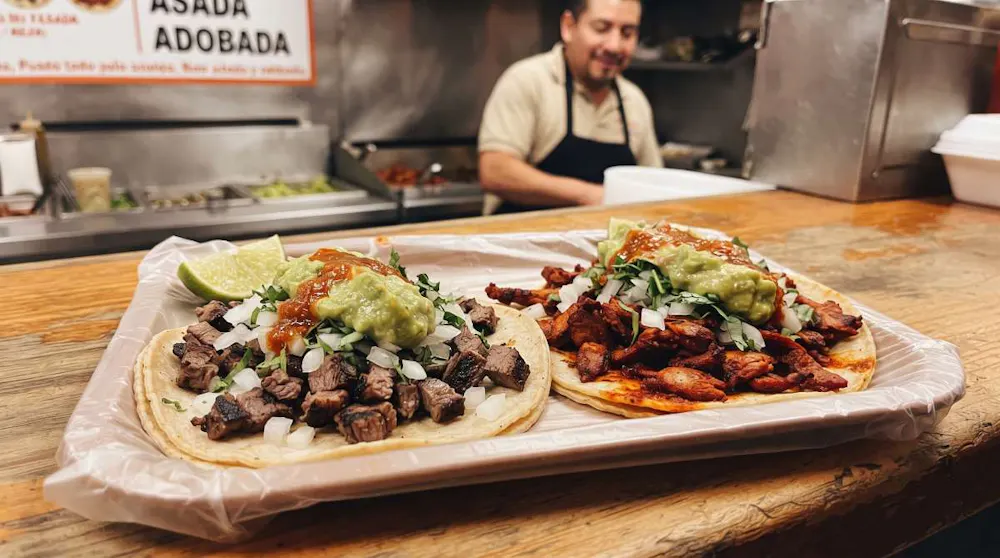
You can see the pairing on a working menu. Tacomasa's menu lists asada (steak) and adobada (pork) side by side on tacos, tortas, quesadillas, and fries, plus as breakfast burritos.
Frequently asked questions about these two tacos
Is adobada pork or beef?
It is usually pork. The word simply means marinated, so some cooks apply it to other meats, including chicken or beef. At a Mexican taqueria, expect red chile pork unless the menu says otherwise. Wikipedia lists rib, chicken breast, and Peruvian-style chicken versions too.
Is carne asada always marinated?
Not always. Most of it is marinated in lime juice, salt, and seasonings, but some cooks rub it with salt alone. Either way, it is grilled or seared over high heat to get a charred crust before it gets sliced. Chopping or slicing it thin keeps the chewy cut tender.
Is adobada spicy?
It can be. Many Mexican recipes use guajillo or chipotle chiles, and both can be hot. Heat varies by cook, so ask the counter before you order, and add a cooling topping like guacamole. Carne asada is usually the milder pick, since its marinade leans on citrus and seasoning instead of chiles.
What is the difference between adobada and adovada?
The Mexican version is marinated pork used in tacos, while adovada refers to New Mexico's carne adovada. The New Mexican version is pork cured in red chile and baked slowly in foil or a covered dish, not grilled. Both start with red chile pork, which is why the names get mixed up.
Which cut is best for carne asada?
Skirt steak and flank steak are the standards. Skirt is thinner and fattier, so it cooks fast and tastes rich, while flank is thicker and leaner. Isabel Eats reaches for skirt in tacos and flank for a leaner steak plate, and Wikipedia also lists flap and chuck steak.
The bottom line on carne asada vs adobada
Smoky grilled beef or tangy chile-marinated pork: that is the choice. The marinade, the meat, and often the cooking method set them apart, and in Baja California adobada can simply mean al pastor.
One caveat. Regional names shift, and cooks disagree on what counts as "authentic," so I've flagged where the words overlap. Some sources I used are older, including the 2012 OC Weekly review.
Ready to taste the difference? Order online or find a location.
Feeding a crowd? Tacomasa's catering menu lists a 3-pound platter of asada or adobada, so start with the catering page.
Curious who's behind the menu? Read more about Tacomasa.