
Street Tacos vs Regular Tacos: What Is the Difference?

|
How big is a street taco?
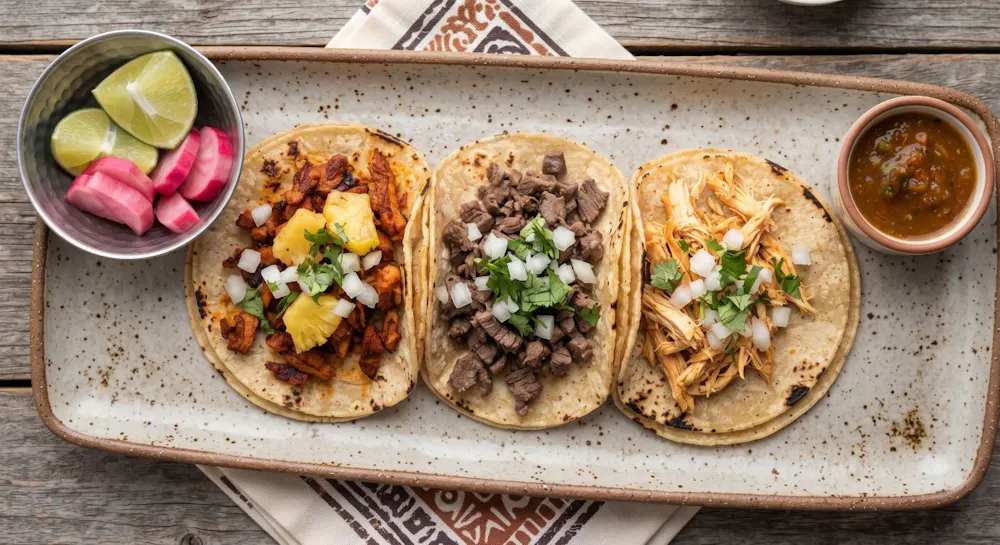
Taco size varies, but these are small: about 3 inches across in Palm Springs Life's reporting, versus 6 to 8 inches or more for restaurant-style soft tacos. There is no official standard.
Oscar Ventura of El Tranvia in Coachella told Palm Springs Life that the point of the little taco is to eat it faster when you're in a hurry. Some shops go bigger, though. Taco Jalisco uses slightly larger tortillas because, Aguirre said, American customers usually want more.
Backyard Taco says only that they are "usually smaller" and gives no number. So treat any exact size as a rule of thumb.
My take: plan on two or three per person. A menu like Tacomasa's shows the same logic, with a combo of two tacos and a trio of three quesatacos.
What toppings go on these tacos: cilantro and onion?
Yes, and not much else. Traditional versions come with diced white onion, a sprinkle of cilantro, and a squeeze of lime, according to Palm Springs Life. That keeps the focus on the meat.
Many shops add a salsa bar, plus radishes, pickled carrots, or jalapeños on the side. Wikipedia notes taco stands often serve radishes, lime, salt, and grilled onions with tacos.
What gets left out matters too. Johanna Valenzuela of Up in Smoke said sour cream, cheese, and lettuce are an American restaurant thing, not the Mexican original.
Guacamole sits in the middle. Wikipedia says grilled tacos are sometimes garnished with guacamole, salsa, onions, and cilantro, so it is a common addition rather than a rule.
Why do these tacos come on a double tortilla?
They often come on two tortillas because one small corn tortilla can tear under juicy meat. Palm Springs Life says taco makers layer two to keep the structure sturdy, whatever the filling.
Wikipedia describes grilled-meat tacos as served on two overlapped small tortillas. Backyard Taco adds that the second one catches extra juices and gives you a backup if the first tears.
The tortillas also get a quick trip to the grill. Ventura said that keeps them from going soggy under salsa. My view: the double layer is simple engineering.
What is a hard shell taco, and is it Mexican?
A hard shell taco is a fried, U-shaped tortilla filled with ingredients like ground beef, cheese, and lettuce. It developed in the United States, and Wikipedia says the hard-shell taco is a tradition that grew up there.
In Mexico, tacos are almost always soft. Tacos dorados do exist in northern Mexico, but Chowhound notes they use soft tortillas that are rolled and fried, with traditional fillings.
No single person invented it, according to historian Jeffrey Pilcher and author Gustavo Arellano in MEL Magazine. Arellano says the earliest known English-language taco recipe in the United States, from a 1914 cookbook, was for a hard shell version.
So the hard shell is Mexican-American food with its own history. It is just a different dish from the street version.
What are taqueria tacos, and where do they fit?
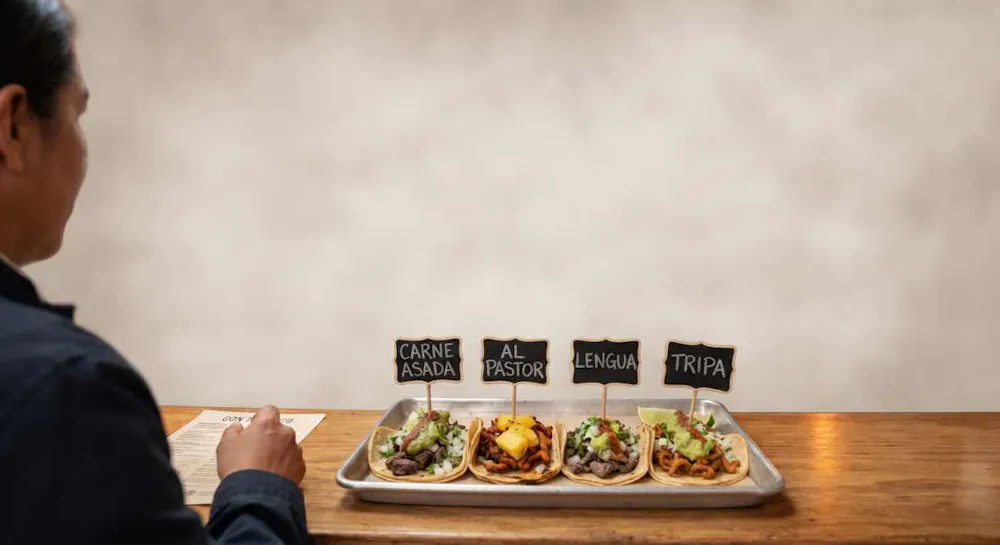
A taqueria is a restaurant built around tacos, and taqueria tacos usually follow the street style with a sit-down menu. Most offer a range of meats, from steak to tongue.
Wikipedia even quotes a saying that a taqueria isn't real unless it offers tacos de lengua, or beef tongue. That is folklore, not a rule, but it shows how seriously people take the meat list.
Tacomasa's menu lists tacos in asada (steak), adobada (pork), nopal (cactus), pollo asado, tripa, and lengua. Each comes "con todo," meaning onion, cilantro, guacamole, and salsa, though tripe and tongue skip the guacamole.
The menu does not say which tortilla Tacomasa uses or how big the tacos are, so ask at the counter if size matters to you.
Which should you order: street tacos or regular tacos?
Order street tacos if you want the meat to be the star, and order regular tacos if you want a loaded meal. Both are real, and neither is better.
- Pick street tacos if you want a fast, meat-forward bite. Expect a corn tortilla, onion, cilantro, and lime.
- Pick a regular taco if you want crunch, cheese, and lettuce. A hard shell works well for that.
- Pick both if you're undecided. Start with a couple of small tacos, then add a regular one.
Frequently asked questions about taco styles
Do taco stands always use corn tortillas?
Usually, yes: corn is the traditional tortilla for them, and flour shows up less often. Some restaurants, like Backyard Taco, let you choose corn or flour. Ask which one you are getting if it matters for your diet. Flour is more typical of burritos and larger restaurant-style soft tacos.
Why are street tacos so small?
They were designed to be eaten quickly, often standing up. Oscar Ventura of El Tranvia says the little size helps people eat fast when they're in a hurry. The small tortilla also pairs with a double layer, so the taco stays together.
Are hard shell tacos street tacos?
No. The hard shell taco is a Mexican-American dish that developed in the United States, and it usually holds ground beef, cheese, and lettuce. The street version uses a soft tortilla and simple toppings, so the two are different dishes.
Do street tacos come with cheese?
Traditionally, no. Backyard Taco says classic versions focus on tortilla, meat, onion, cilantro, salsa, and lime. Cheese does appear in related items, like a mulita, which sandwiches meat and Oaxaca cheese between two tortillas, according to Wikipedia. Tacomasa's menu also lists quesatacos, so ask for cheese if you want it.
What meat goes in street tacos?
It depends on the region. Palm Springs Life says coastal Mexico leans on fish and shrimp, while Guadalajara favors asada, al pastor, lengua, and cabeza. Pork, beef, and chicken are the classic proteins. Backyard Taco lists carne asada, pollo, al pastor, carnitas, and birria as common picks.
The bottom line on street tacos vs regular tacos
The small, soft version keeps the meat in charge. A regular taco is bigger, often crunchy, and layered with toppings. Both are worth ordering, and the difference comes down to tortilla, size, and toppings.
One caveat. "Regular taco" is my shorthand, not an official term, and sources disagree on exact sizes, so treat inches as a rule of thumb. Some sources I used are older too, including a 2018 Palm Springs Life feature.
Ready to taste the difference? Order online or find a location.
Feeding a crowd? Tacomasa's catering menu lists a 3-pound platter with tortillas, cilantro, onion, and salsa, so see the catering page.
Curious who's behind the menu? Read more about Tacomasa.