
What Is a Mexican Burrito? Origin, Types, and Fillings

Ask five people what a Mexican burrito is and you'll get five answers. One pictures a foil-wrapped giant stuffed with rice and beans. Another pictures a small, thin tortilla with a spoonful of stewed meat.
Both are right, and both are only part of the story. I'd argue the burrito is a northern Mexican dish that the United States turned into several different dishes, and that's where the confusion starts.
This guide covers the burrito origin, the main types of burritos, and how to order one at a working taqueria like Tacomasa. Every fact comes from food historians, dictionaries, or regional newsrooms, checked in October 2026.
What is a burrito, and what makes it a Mexican burrito?
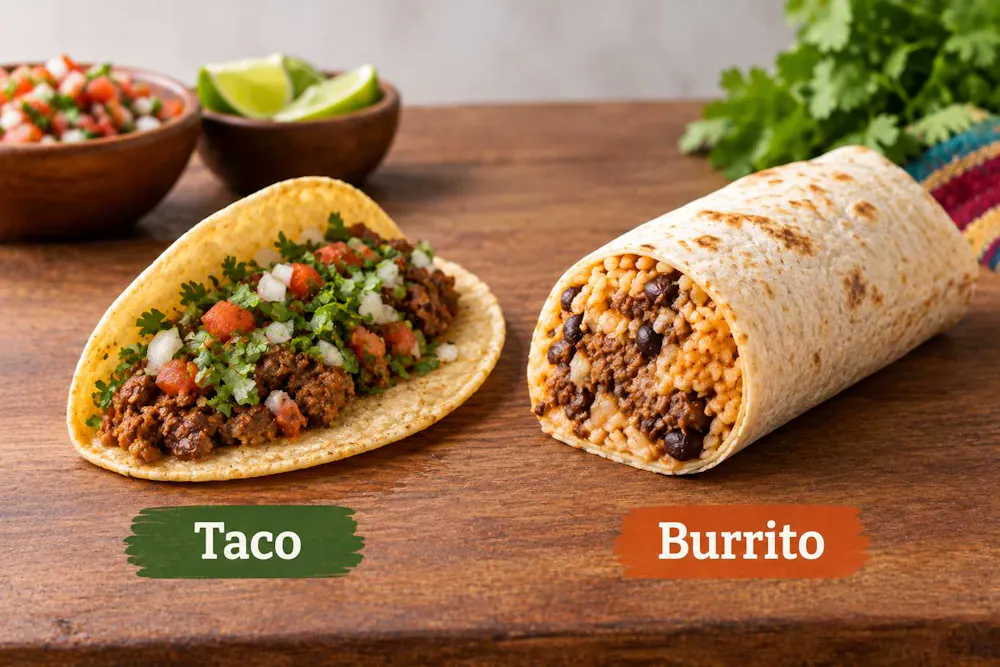
A burrito is a flour tortilla wrapped into a sealed cylinder around savory fillings, usually meat and beans. A Mexican burrito follows the northern pattern: a warm tortilla, a short list of fillings, eaten by hand. The tight seal is what separates it from an open taco.
Think of a taco as an open book and a wrapped burrito as a sealed envelope. Nothing falls out, which is why you can eat one with a single hand.
The flour tortilla is the whole trick.
Wheat arrived in northern Mexico after the Spanish conquest, USA Today explains, and that blend of traditions produced a tortilla sturdy enough to fold shut.
Cooks often steam or grill it first, traditionally on a comal (a flat griddle), so it turns pliable and sticks to itself.
One note on words. In central and southern Mexico, a burrito is still called a taco de harina, or wheat flour taco, because the word taco won out there, per Wikipedia.
Where does the burrito origin story really begin?
The honest answer is that nobody knows for certain, and as of October 2026 no source has settled it. Food historian Jeffrey Pilcher told USA Today that today's burrito is a relatively new dish that took shape in northern Mexico.
The word is older than the dish. An 1895 Mexican dictionary, the Diccionario de Mejicanismos, defined burrito as a rolled tortilla with meat inside, a regional name used in Guanajuato for what other places call a taco.
The name means "little donkey." Theories range from the rolled packs donkeys carried to a Sonoran account that mocked street vendors who passed off donkey meat as beef.
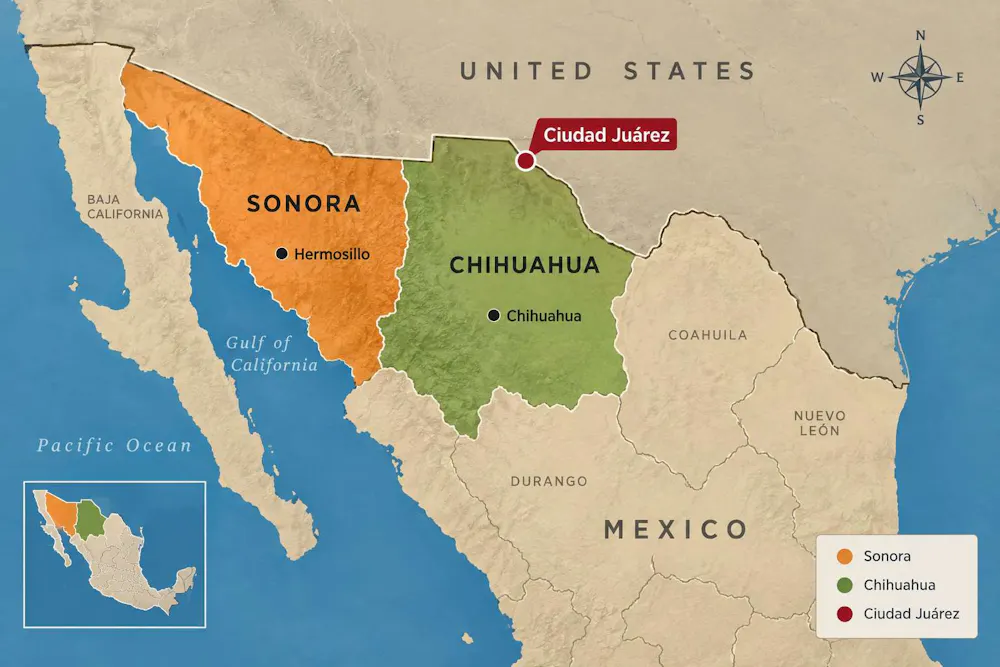
The most repeated folk story features Juan Méndez, a taco seller in Ciudad Juárez during the Mexican Revolution. He supposedly wrapped food in large flour tortillas to keep it warm while traveling by donkey. Treat that as folk history, not documentation.
Ciudad Juárez, across the border from El Paso, Texas, is where the modern sealed burrito is said to have taken shape.
From there the dish crossed north. Burritos appeared on Los Angeles menus in the 1930s at El Cholo Spanish Cafe, and Dictionary.com dates the English word to the early 1940s.
My take: stop hunting for one inventor. Chef Minerva Orduño Rincón, quoted by USA Today, argued the burrito most likely sparked in several places at once.
Los Angeles Times columnist Gustavo Arellano told KQED that very few Mexican food origin stories can be called settled.
What are the most common burrito fillings?
Burrito fillings start with a protein and a bean, then multiply with geography. In northern Mexico the list stays short. Wikipedia describes authentic burritos as small and thin, holding only one or two items such as meat, potato, rice, beans, asadero cheese, chile rajas, or chile relleno.
Most American versions add more. Here is the usual lineup:
Meat: beef, chicken, or pork, often grilled or shredded, with barbacoa and carne asada as favorites.
Beans: whole or refried (cooked, then mashed).
Rice: standard in Mission-style burritos, optional in northern Mexican ones.
Cheese: asadero in the north, cheddar in classic Los Angeles versions.
Toppings: salsa, pico de gallo, guacamole, or crema.
Rice and beans deserve a note. Pilcher says Caribbean influences likely brought them into the dish. They're a given in most American burrito lines, yet a plain bean and cheese burrito skips the rice, and so does the famous La Taqueria in San Francisco, according to KQED.
I'd rather eat a burrito with three well-cooked fillings than eight mediocre ones. Past a certain point, the tortilla stops being the point.
What are the main types of burritos?
The main types of burritos are northern Mexican, Mission, California, Los Angeles style, wet, and breakfast burritos, plus the deep-fried chimichanga. This table shows how they compare.
Type | Where it comes from | Typical fillings | Best for |
| Northern Mexican burrito | Chihuahua, Sonora, Ciudad Juárez | Meat, potato, beans, or asadero cheese; one or two items | A light, simple meal |
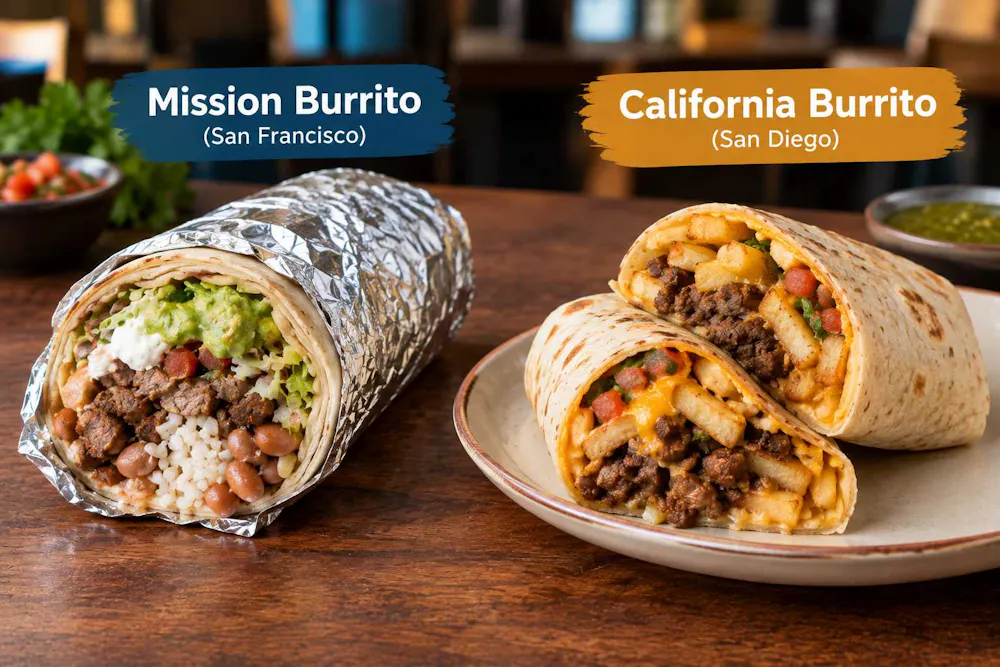
| Mission burrito | San Francisco, 1960s and 1970s | Carne asada, rice, whole beans, sour cream, foil wrap | A big appetite |
| California burrito | San Diego | Carne asada, fries, cheese, pico de gallo | Meat lovers |
| Los Angeles style | Mexican American cafes in LA | Refried beans, meat or chili, cheddar; rice is rare | Bean and cheese fans |
| Wet burrito | Common in U.S. Mexican restaurants | Red chili sauce and melted cheese on top | Sauce lovers with a fork |
| Breakfast burrito | New Mexico, Southwest, California | Scrambled eggs plus potato, bacon, or chorizo | Mornings |
| Chimichanga | Southwest U.S., Sonora, Sinaloa | Deep-fried burrito | Crunch |
The Mission burrito deserves a longer look. It is built on a steam table assembly line, like a sandwich counter: pick a protein, then beans, rice, and toppings. Febronio Ontiveros claims he sold the first one in 1961 at El Faro, though the origin is disputed.
Some Mission taqueria owners reject the label "Mission style" altogether, KQED reports. Arellano credits Chipotle with spreading the model across the country in the mid-1990s.
What is a street style burrito?
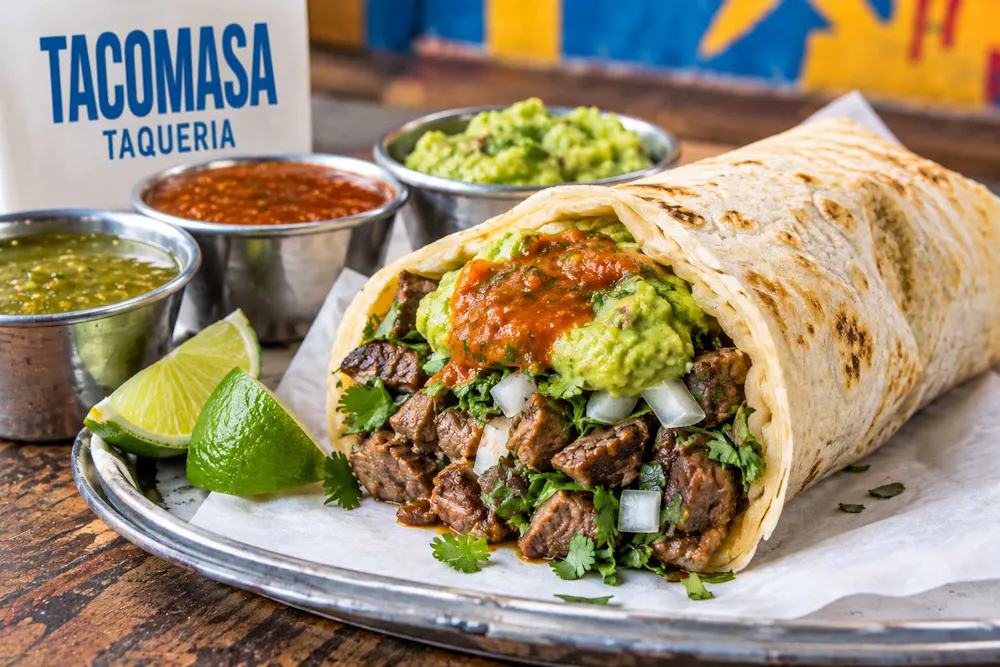
A street style burrito is a stripped-down taqueria burrito: a warm tortilla, one main filling, and a few fresh toppings instead of a pile of extras. I should be upfront that street style is not an official category, and none of the sources I checked define it. This is the sense I use here.
The idea comes from how burritos began in the north. Wikipedia notes they are bought at restaurants and roadside stands in Ciudad Juárez, small and thin with a couple of fillings. San Diego's no-frills burrito shops work from the same instinct and skip the assembly line.
You can see the style on a working menu. Tacomasa's burrito menu lists burritos "con todo," meaning with onion, cilantro, guacamole, and salsa.
Fillings run from asada (steak) to nopal (cactus), lengua (tongue), and tripa (tripe).
My rule for judging one: if the tortilla and the meat are good, the burrito is good. Everything else is decoration.
Where did the California burrito come from?
The California burrito is a San Diego creation built from carne asada, French fries, cheese, and toppings like pico de gallo and sour cream, all in a flour tortilla.
KPBS reported in April 2026 that nearly everyone agrees it's a San Diego regional dish.
Think of it as carne asada fries, rolled up. Wikipedia notes the ingredients match that dish, which is a staple of local cuisine.
The origin is muddled. Accounts range from the 1960s to the 1980s. Wikipedia, citing Arellano, places it at an unknown "-berto's" taqueria in the 1980s, while Santana's Mexican Grill and the Lolita's chain each have their own claims. The earliest known published mention is a 1995 Albuquerque Tribune article.
I know the fries sound like a gimmick. I'd say they earn their spot: they add the starch that rice and beans supply in other burritos.
How do you order a taqueria burrito?
Order a taqueria burrito by choosing a protein, deciding on toppings, and telling the counter whether you want beans, rice, or neither. Here is the process:
Pick the protein. If you're new, start with asada (steak) or chicken, then try adobada (marinated pork).
Ask for "con todo." On Tacomasa's menu that means onion, cilantro, guacamole, and salsa.
Settle beans and rice. Ask what comes standard, since Mission style includes both and northern Mexican styles often skip them.
Choose your heat. Salsa levels vary, so ask before you commit.
Decide dry or wet. A wet burrito is covered in red chili sauce and cheese and eaten with a knife and fork.
Eat it while the tortilla is warm.
To see how this plays out in practice, browse the full burrito and taco lineup and match the steps above to what you see.
Frequently asked questions about the Mexican burrito
Is a burrito Mexican or American?
Both, depending on the style. Burrito was a regional Mexican word for a taco, and historians place the modern dish in northern Mexico. Many styles Americans eat today, including Mission and California, developed in the United States. Even inside Mexico, burritos are popular mainly in the north.
What is the difference between a burrito and a taco?
A taco is usually smaller, served open, and often made with a corn tortilla. A burrito is larger, wrapped and sealed, and usually made with flour. Some food writers argue burritos are simply a kind of taco, which fits the history: in much of Mexico, the burrito was once just a taco.
What is a wet burrito?
A wet burrito is covered in a savory red chili sauce, similar to enchilada sauce, with melted shredded cheese on top. You eat it from a plate with a knife and fork instead of by hand. Menus also call it smothered, enchilada style, or mojado, which is Spanish for wet.
Is a burrito bowl a burrito?
Not technically. A burrito bowl serves burrito fillings, usually over rice, without a tortilla wrapped around them. It is a close cousin, but the sealed tortilla is what makes a burrito a burrito. A burrito bowl is also different from a taco salad, which sits on lettuce.
What is in a breakfast burrito?
A breakfast burrito is built on scrambled eggs, wrapped in a flour tortilla, and popularized in New Mexican, Southwestern, and Californian cooking. Tacomasa's breakfast burritos pair egg and cheese with steak, pork, cactus, or bacon.
The bottom line on the Mexican burrito
A Mexican burrito is a wrapped flour tortilla with a short list of fillings, rooted in northern Mexico. Everything bigger, wetter, or fancier came later, mostly from California. Pick a Mission burrito for volume, a California burrito for meat and crunch, and a street style burrito when you want the tortilla and the meat to shine.
One caveat. This guide reflects published food history, and origin claims in particular are disputed, so I've labeled theories as theories. Street style is also my working label, not an industry term.
Ready to try one? Order online or find a location.
Feeding a crowd? Start with the catering page.
Curious who's behind the menu? Read more about Tacomasa.
Last updated: October 2026