
What Is a Torta? The Classic Mexican Sandwich
Last updated: October 24, 2026. Written by the Tacomasa team.
Ask for a torta in Spain and you might get a cake. Ask at a taqueria and you get a Mexican torta, a sandwich big enough to be lunch and dinner.
It looks simple: bread, meat, toppings. But the roll, the toast and the layering are what set it apart from an ordinary sandwich. Here’s how it all works.
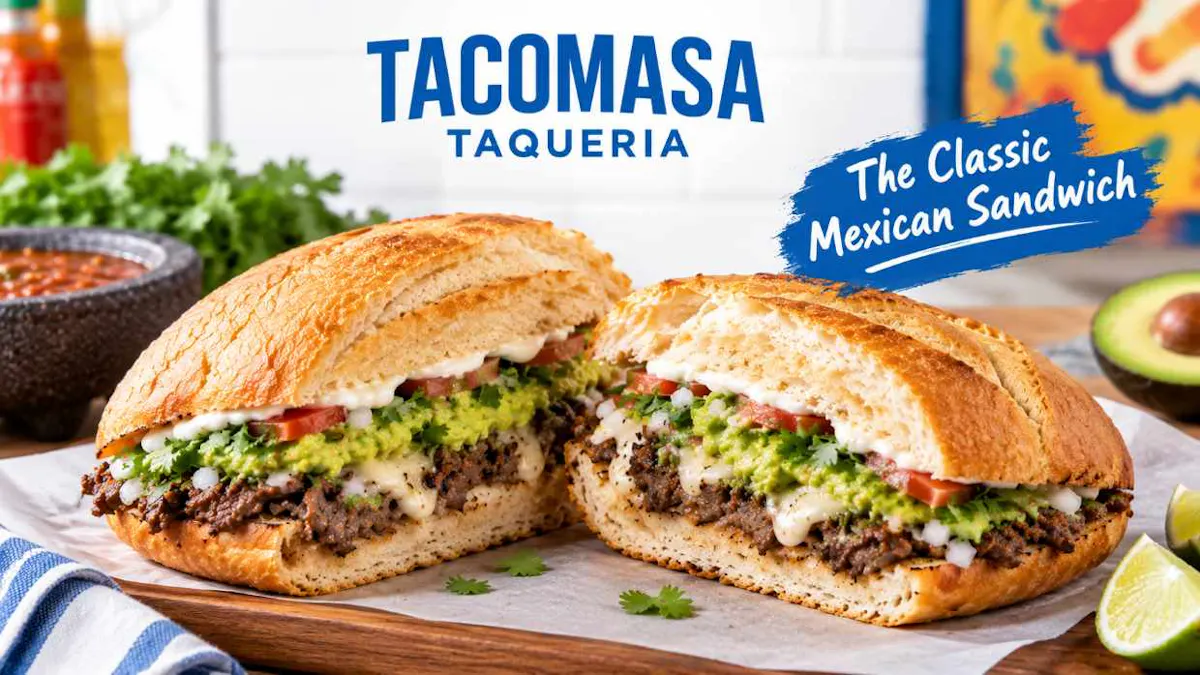
What is a torta? It’s a Mexican sandwich made on a crusty white roll, usually a bolillo or a telera. The roll is split, toasted and filled with meat such as carne asada, then layered with toppings like avocado, cheese, mayonesa, onion and salsa.
What makes a Mexican torta different from other sandwiches?
It stands out for three things: the roll, the toasting and the toppings. The bread is crusty outside and soft inside, it’s warmed on a griddle, and the fillings mix rich meat with cool avocado and sharp chile.
Think of it as what happens when a French roll meets a taqueria. The bread came from European baking, but everything inside it is Mexican.
Tasting Table points out that these look like any sandwich at first glance, but the fillings sold at a torteria (a shop that specializes in them) are very different from an American sandwich counter.
What bread is used for a torta?
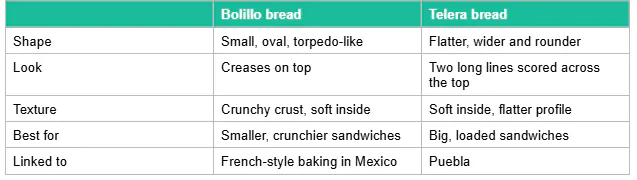
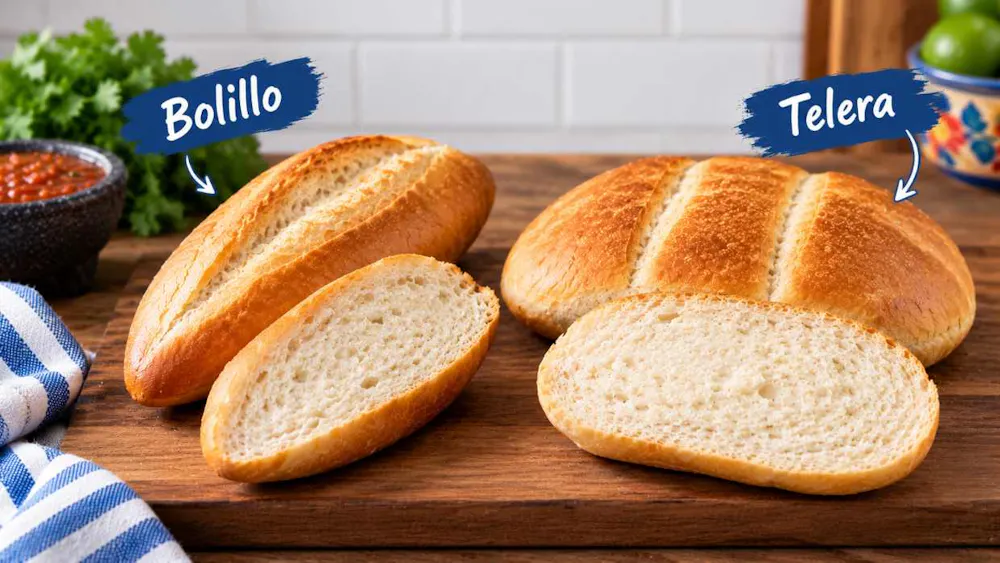
The two classic types of torta bread are the bolillo and the telera. Both are white rolls with a crisp crust and a soft center, so the bread holds the fillings without turning soggy.
What is bolillo bread?
Bolillo bread is a small crusty sandwich roll, often described as Mexico’s take on the French baguette. Food Network describes it as shorter and softer than a baguette, with a crunchy exterior.
Mexico News Daily credits the bolillo to Camille Pirotte, a Belgian baker who came to Mexico during the French Intervention in the 1860s.
What is telera bread?
Telera bread is a flatter, wider roll with two lines pressed across the top, which divides it into three sections. Tasting Table traces it to Puebla, and Mexico News Daily says it has been made from bolillo dough in Mexico since at least 1871.
The telera’s flat shape is why many cooks prefer it for big, loaded sandwiches. It gives you more surface for fillings and an easier bite when the sandwich is loaded.
Where does the torta come from?
It’s usually traced to Mexico City, but the full story is a little messier. The most popular account credits Armando Martínez Centurión, who began selling tortas compuestas (sandwiches with mixed fillings) in Mexico City in 1892, according to Mexico News Daily.
The same report adds a twist: a “torta compuesta” shows up in an 1864 advertisement in a Puebla newspaper. Food Network also notes that the sandwich is said to have started in Puebla, where French-style bread arrived with the French presence of the 1860s.
Our honest take? Both cities have a fair claim. Puebla had the bread first; Mexico City made it a famous part of Mexico City street food. The shop Armando founded is still operating today.
What are the classic torta toppings?
Classic torta toppings balance a rich filling with something creamy, something fresh and something spicy. Most use some mix of these:
Mayonesa (mayonnaise): spread on the bread for richness and to keep it from drying out.
Avocado or guacamole: the creamy layer that turns many into a kind of avocado sandwich.
Cheese: melted or sliced, often a mild white cheese.
Cebolla (onion) and cilantro: sharp, fresh crunch.
Salsa or chiles: heat to cut through the fat, from pickled jalapeños to chipotle.
Beans, lettuce or tomato: common at many torterias, though not every shop adds them.
Mayonnaise surprises some first-timers, but it does real work. It coats the warm bread, carries the heat of the salsa and keeps every bite moist.
Torta vs sandwich: what’s the difference?
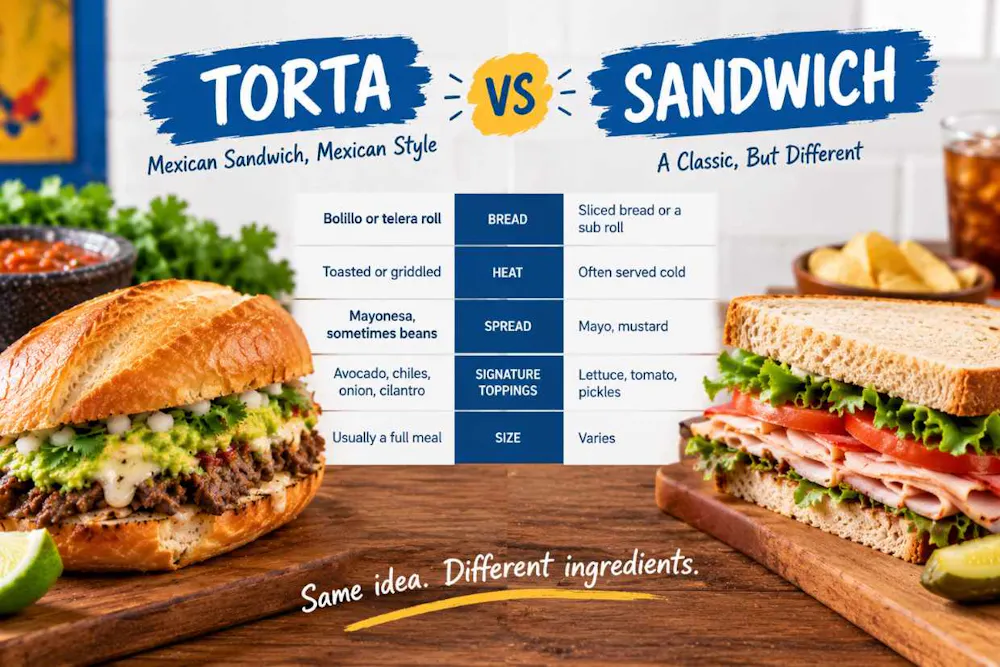
The torta vs sandwich question has a simple answer: every torta sandwich is a sandwich, but not every sandwich qualifies. What sets it apart is the Mexican roll, the toasting and the toppings.
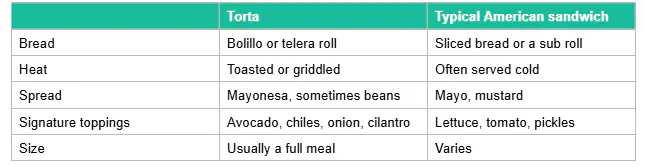
A good comparison is a toasted sub roll. The idea is the same, but this version trades the deli counter for the taqueria griddle, and that changes the whole flavor.
What is a torta de asada?
A torta de asada is filled with carne asada, grilled and chopped steak. It’s the classic grilled steak sandwich and the version many taquerias lead with.
The smoky beef needs the cool toppings. Guacamole and mayonesa soften the char, while onion, cilantro and salsa keep it bright. If you’re torn between steak and marinated pork, our carne asada vs adobada guide explains the difference.
How do we make them at Tacomasa?
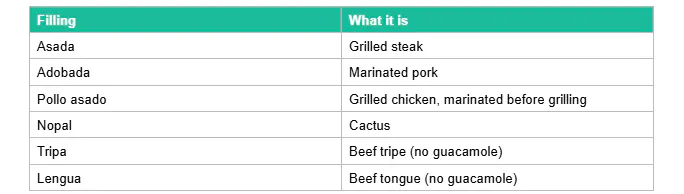
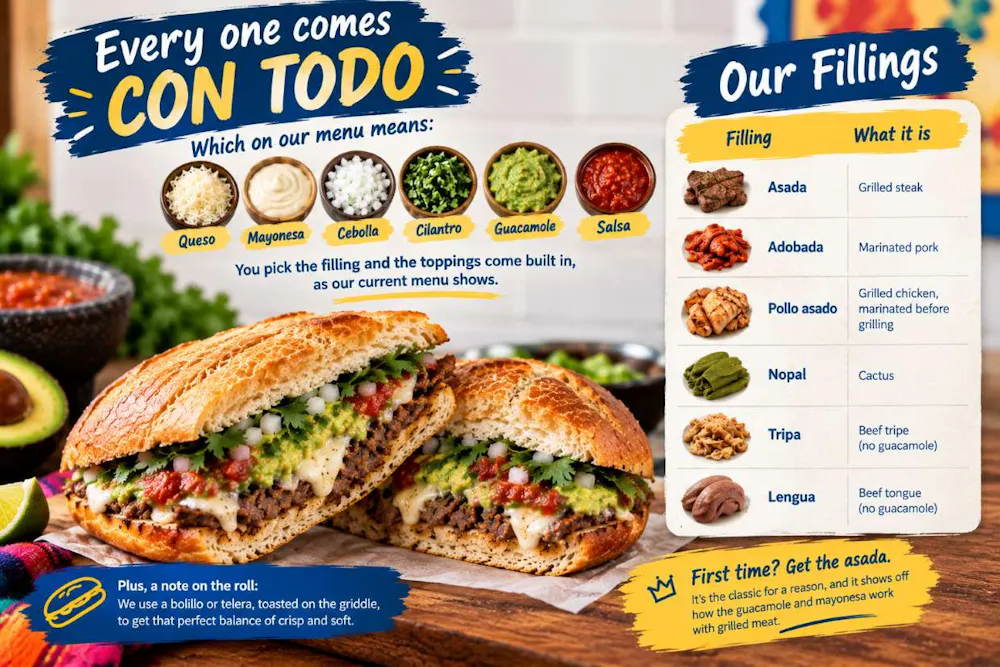
At Tacomasa, every one comes con todo, which on our menu means queso, mayonesa, cebolla, cilantro, guacamole and salsa. You pick the filling and the toppings come built in, as our current menu shows:
New to the phrase? ur guide to what con todo means breaks down every topping. Curious about tongue? Our explainer on what lengua is covers what it tastes like.
We’ll be straight with you: if it’s your first one, get the asada. It’s the classic for a reason, and it shows off how the guacamole and mayonesa work with grilled meat.
When is a torta the right order?
Order one when you want a hand-held meal instead of a few small tacos. It’s the ideal lunch sandwich: filling, easy to carry and built to travel better than a plate of tacos.
Pick the sandwich when you’re hungry and want everything in one bite.
Pick tacos when you want to try several meats.
Pick a burrito when you want rice and beans wrapped in, too.
Feeding a team? Our catering menu includes sandwich packs and a combo of sandwiches and burritos for offices and parties.
Where can you get a torta in Southern California?
You can order one at every Tacomasa location in Long Beach, Cypress, El Segundo and Brea. Find hours and addresses on our locations page.
Frequently asked questions
What does torta mean in Spanish?
The word changes meaning by country. In Spain and much of Latin America, it often means a cake or a flat round pastry. In Mexico, and on American taqueria menus, it almost always means a sandwich on a bolillo or telera roll.
Is a torta the same as a cemita?
Not quite. A cemita is a sandwich from Puebla made on a round, sesame-seeded roll of the same name, usually with breaded pork and cheese. Mexico News Daily lists it as a regional torta variation. Think of it as a close cousin with its own bread.
Can you use other bread?
Yes, if you can’t find a bolillo or telera. Food Network suggests Portuguese rolls, French bread or Kaiser rolls as stand-ins, but warns that ciabatta and baguettes can be too tough. The goal is a sandwich roll with crusty bread on the outside and a soft middle.
Are they served hot or cold?
Most are served warm. The roll is usually toasted on a griddle or press, and hot fillings like carne asada go in right off the grill. A few regional styles are served cold or at room temperature, but at a taqueria you should expect yours warm and toasted.
What is a torta ahogada?
A torta ahogada, or “drowned sandwich,” is a Guadalajara specialty soaked in spicy red sauce and eaten with a knife and fork. Mexico News Daily credits it to Luis de la Torre in the 1920s. It’s a regional style; ours are the classic hand-held kind.
Is a torta healthy?
It’s a large, filling meal, so it’s best treated as a full lunch rather than a snack. Pollo asado (grilled chicken) or nopal fillings are lighter choices than richer meats, and you can ask for less mayonesa. This is general guidance; for specific nutrition needs, check with a doctor or dietitian.
The bottom line
A Mexican torta is a sandwich on a crusty bolillo or telera roll, toasted and stacked with meat, avocado, mayonesa, cheese and salsa. It started with French-style bread and became a Mexican classic.
Our advice is to start with the asada con todo and taste how the creamy and spicy layers work together. Every filling we offer is on our Tacomasa menu.
Last updated: October 24, 2026