
What Is Lengua? Beef Tongue Tacos Explained

Tongue is the taco a lot of people skip the first time they read a taqueria menu. Then they try a friend’s, and it becomes the one they order every visit.
If the word “tongue” is what’s holding you back, this guide is for you. Here’s what it is, how it’s cooked, what it tastes like and how we serve it.
What is lengua? It’s the Spanish word for tongue. On a Mexican taqueria menu it means beef tongue that’s been slow cooked until tender, peeled, chopped and served in tacos, burritos and tortas. It tastes like rich, mild beef and has a soft, tender texture.
What is lengua, exactly?
It’s beef tongue, a cut from cattle that butchers group with offal (the organs and other non-muscle parts of an animal, also called variety meats). Strictly speaking, though, the tongue is a muscle, which is why it eats more like tender beef than like liver or kidney.
Think of it like chuck roast that has to be cooked low and slow. Raw, the tongue meat is firm and wrapped in a rough outer skin. After hours of braising, the skin peels off and the inside turns soft enough to chop with a spoon.
That’s why lengua meat sits in its own category. Offal on paper and technically Mexican organ meat, but on the plate it’s closer to slow cooked beef from cattle you already know.
How is lengua cooked for tacos?
Tongue is cooked by braising (simmering slowly in liquid) until the tough muscle turns tender. MasterClass describes a braise of about three to four hours.
The basic process looks like this:
Simmer the whole tongue in water or broth with onion, garlic and bay leaves for several hours.
Peel off the outer skin while it’s still warm. It comes away easily once the tongue is cooked.
Dice the meat into small cubes.
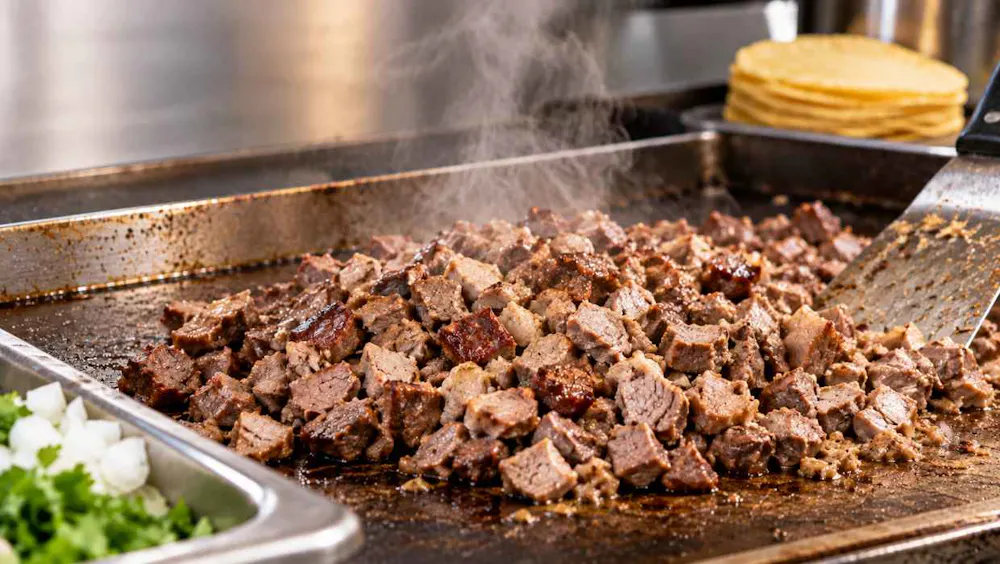
Warm it on the griddle just before it goes into a tortilla, so the edges firm up.
The result is braised tongue that’s soft in the middle with a little texture on the outside. It’s the same idea as a pot roast: time does the work, not the seasoning.
What does lengua taste like?
It tastes like mild, rich beef. Most people compare it to tender pot roast or brisket, without the stringy grain.
Opinions on the flavor do differ a little. Muy Bueno’s beef tongue guide says it has no strange aftertaste at all, while MasterClass calls it slightly gamier than an average steak.
Our take: if you like the beefy fat of a good carne asada, you’ll like this too.
What is lengua texture like?
The lengua texture is what wins people over. Cooked properly, it’s soft and almost buttery, closer to a slow-braised short rib than a grilled steak.
When it’s undercooked, it turns chewy. That’s the main reason some people had a bad first experience, and it’s why a good taqueria takes its time with it.
Where do tacos de lengua come from?
Tacos de lengua come from Mexico’s long habit of nose to tail cooking, where every part of the animal gets used. Tongue, head and tripe are standard taqueria fillings, and offal has always had a place in Mexican cuisine.
One of the oldest examples is in Mexico City. Chilango reports that El Taquito, founded in 1923 and often called the city’s oldest taqueria, built its name on lengua and carnitas tacos.
Tongue isn’t only a Mexican tradition: the Dallas Observer notes it’s eaten across much of Europe, from Belgium and Germany to Portugal and Russia.
Is lengua healthy?
Beef tongue is a protein-rich food that’s also high in fat, so whether it’s healthy depends on how much you eat and what it comes with. Here’s what USDA data shows for plain simmered beef tongue:
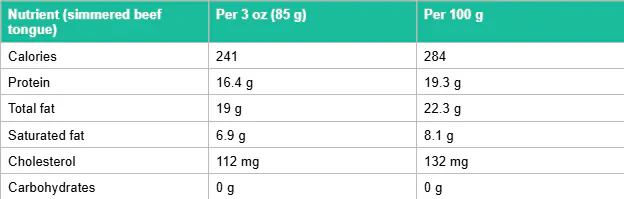
Source: USDA FoodData Central, SR Legacy entry 170598 (beef, tongue, cooked, simmered), via MyFoodData.
The upside is real: tongue is also a strong source of vitamin B12 and zinc, according to the same USDA data. The trade-off is that about 72% of its calories come from fat.
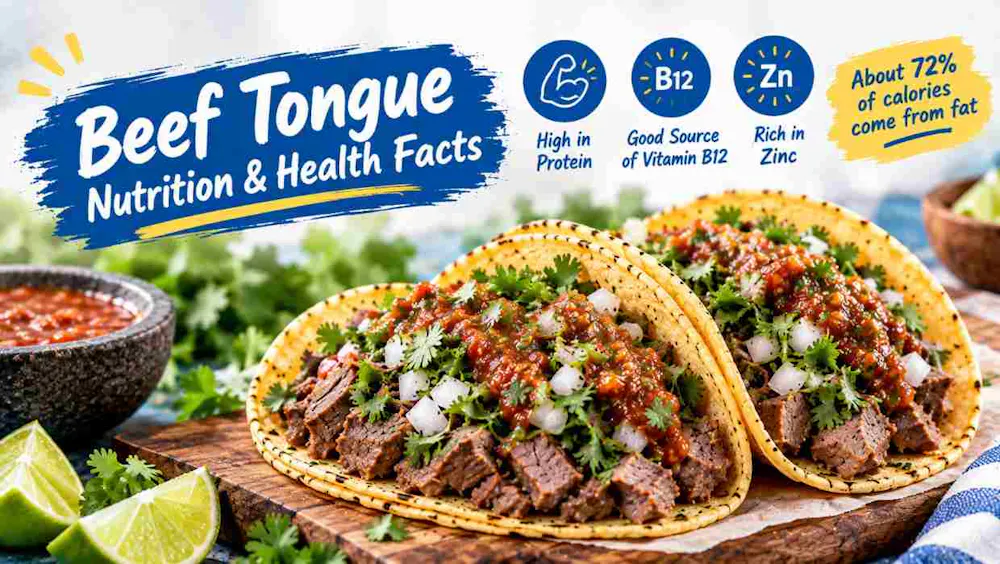
One honest caveat: a taco adds the tortilla, salsa and toppings, so these numbers describe the meat, not the full taco. This is general information, not medical advice. If you’re watching saturated fat or cholesterol, talk to your doctor or a dietitian about how it fits your diet.
How do we serve lengua at Tacomasa?
At Tacomasa, tongue is one of the six fillings on our menu, and you can get it in almost every format we make. Everything below comes straight from our current menu:
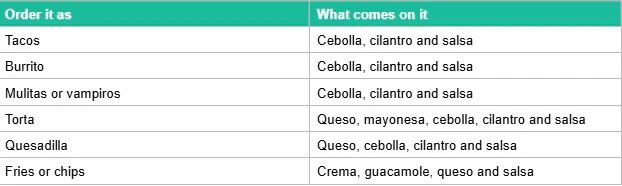
You’ll notice there’s no guacamole on most of these. That’s on purpose: our menu serves tripa and lengua con todo without guac, with fries as the exception. If the phrase is new to you, our guide to what con todo means explains the full topping set.
Not sure whether to go taco or something bigger? Our mulitas vs vampiros breakdown explains both, and soft tongue is a natural fit for a mulita.
How should first-timers order it?
Order it the simple way first: two tacos, con todo, with a squeeze of lime. Onion, cilantro and salsa are all it needs, and the small corn tortilla keeps the focus on the meat.
We’ll be straight with you: don’t bury your first tongue taco under extras. Taste the tender beef on its own before you decide how you like it.
A few more tips:
Order it alongside a meat you know. One tongue taco next to an asada taco makes the comparison easy.
Go bigger once you’re hooked. A burrito or torta gives you more of it per bite.
Pick a bright salsa. Acid and heat balance the richness of the meat.
If you’re new to taqueria-style tacos in general, our post on street tacos vs regular tacos covers why the tortillas are small and the toppings are simple.
Where can you try lengua tacos in Southern California?
You can order beef tongue tacos at every Tacomasa location in Long Beach, Cypress, El Segundo and Brea. Find hours and addresses on our locations page.
Frequently asked questions
Is lengua beef or pork?
At most taquerias it means beef tongue, which is what we serve at Tacomasa. Pork and lamb tongue exist too, and home cooks sometimes swap them in, but beef is the standard in Mexico and Southern California. At a new spot, just ask “es de res” (is it beef).
Why does tongue cost more than other taco meats?
Each animal has only one tongue, and it shrinks during cooking, so a whole tongue yields a modest amount of meat. Muy Bueno points to rising demand and limited supply as the main reasons for higher prices. That’s why it sometimes costs more than asada at taquerias that price meats separately.
Is beef tongue chewy?
It shouldn’t be chewy if it’s cooked long enough. A properly braised beef tongue is soft and tender all the way through. Chewiness usually means it was undercooked or the outer skin wasn’t fully removed, so a bad first taco isn’t a fair verdict on the meat itself.
Do tacos de lengua come with guacamole?
It depends on the taqueria. At Tacomasa, tongue comes con todo with cebolla, cilantro and salsa but no guacamole, on tacos, burritos, mulitas, vampiros, tortas and quesadillas. Many other shops follow the same simple onion, cilantro and salsa build for tongue.
Is lengua the same as cabeza?
No. One is the tongue only, while cabeza is meat from the head of the cow, usually the cheek. Both are slow cooked and both show up on Mexican taqueria menus, but cabeza is a different cut with its own texture. We serve tongue; cabeza isn’t on our menu.
Can you get a lengua burrito?
Yes. Our lengua burrito is filled with chopped beef tongue and comes con todo with cebolla, cilantro and salsa, a good pick once you know you like the meat. For how a burrito differs from a taco, see our explainer on what a Mexican burrito is.
The bottom line
Lengua is beef tongue, braised for hours until it turns soft, rich and beefy, then chopped for tacos, burritos and more. It sounds unusual, but it eats like the most tender pot roast you’ve had.
Our advice is to order two tacos con todo next to a meat you already love, then decide for yourself. Every way we serve it is listed on our Tacomasa menu.
Last updated: October 24, 2026