
What Is Horchata? Ingredients, Taste & History

what you need to know
- What is horchata? A sweet, milky-looking drink made by soaking a grain, nut or seed in water, blending it and straining it.
- Mexican horchata (horchata de arroz) is made from rice, cinnamon and sugar, sometimes with vanilla or milk.
- Spanish horchata from Valencia is made from tiger nuts (chufa), not rice.
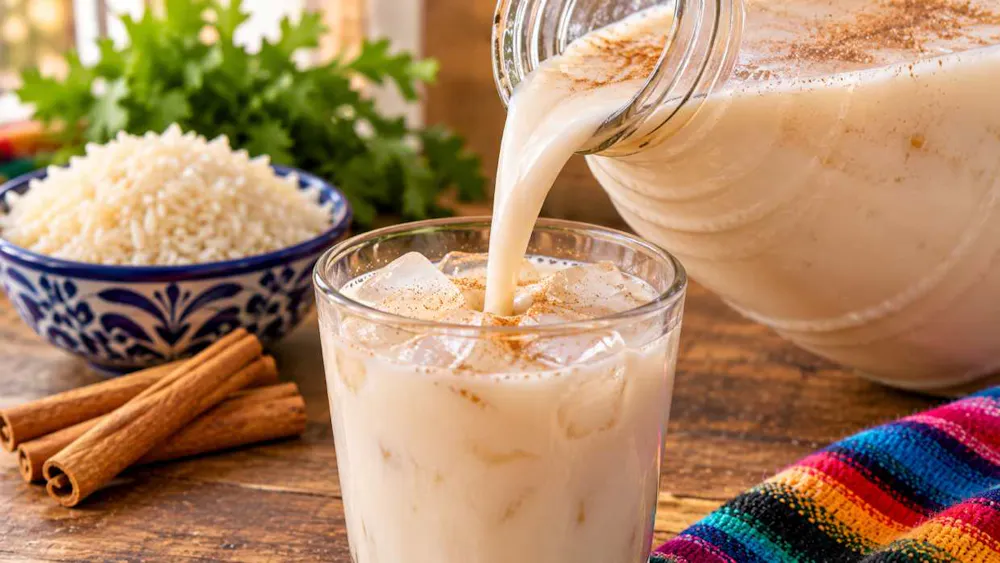
- Taste: creamy, sweet and cinnamon-forward, a bit like rice pudding you can drink.
- At Tacomasa, it’s one of our refrescos, served ice cold next to tacos.
Last updated: November 3, 2026. Written by the Tacomasa team.
Order tacos at almost any taqueria in Southern California and you’ll see a big glass jar of something white and creamy by the register. That’s horchata, and for a lot of people it’s the drink that makes the meal.
Here’s what’s actually in it, what it tastes like, whether it has dairy, and how a drink from Spain became a taqueria staple in Mexico.
What is horchata? It’s a sweet, plant-based drink made by soaking a grain, nut or seed in water, blending it and straining out the solids. In Mexico it’s made with rice and cinnamon; in Spain, with tiger nuts. Both are served cold.
What is Mexican horchata made of?
The Mexican version, called horchata de arroz, is made from long-grain white rice, cinnamon, sugar and water. Some recipes add vanilla, and some add a splash of milk for extra creaminess.
Think of it as cinnamon rice water that’s been blended until it turns milky. The grain gives body, the cinnamon gives warmth, and the sugar makes it a dessert-like sweet drink.
These are the core horchata ingredients:
- Rice: soaked until soft, then blended. It’s the base and the source of that milky look.
- Cinnamon: soaked with the grain, often as whole sticks, and the main flavor.
- Sugar: it’s meant to be sweet; this isn’t a lightly sweetened drink.
- Water: most of the volume. The solids are strained out after blending.
- Vanilla (optional): adds a soft, rounder sweetness.
- Milk (optional): some recipes add it; many don’t.
Wikipedia notes that this cinnamon version, sometimes with vanilla, is the most common one in Mexico.
How is horchata de arroz made?
It’s made by soaking the grain and cinnamon, blending them with water, straining the mix and chilling it. Food Network’s guide recommends an overnight soak.
The process looks like this:
- Rinse the grains to remove loose starch.
- Soak them with cinnamon in hot water, usually overnight.
- Blend everything with sugar and fresh water until smooth.
- Strain it through a fine sieve or cloth to remove the grit.
- Chill and serve over ice, stirring first because it settles.
That last step matters more than it sounds. The blended grain settles to the bottom, which is why taquerias stir the jar before every pour.
What does horchata taste like?
It tastes creamy, sweet and strongly of cinnamon. Picture the milk left at the bottom of a bowl of cinnamon cereal, or a drinkable rice pudding, served ice cold.
The texture can be silky or slightly grainy, depending on how finely it’s strained. Food Network describes the Mexican style as sweeter than the Spanish version, with a strong cinnamon flavor and sometimes a slightly gritty texture.
We’ll be straight with you: if you like cinnamon, you’ll probably love it. If you don’t like sweet drinks, start with a small cup.
Does horchata have dairy?
The traditional Mexican recipe doesn’t need dairy, because it’s made from grain and water. That’s why it’s often thought of as a dairy free drink.
But many recipes and shops add milk, evaporated milk or condensed milk for richness. The Daily Meal notes that the Mexican style is sometimes made with milk for extra creaminess.
So the honest answer is: it depends on who made it. If you avoid dairy, ask before you order. Don’t assume the creamy color comes from the grain alone.
Horchata vs rice milk: what’s the difference?
The main difference is flavor and sweetness. Both are rice drinks made by blending and straining grains, but one is flavored with cinnamon and sweetened like a treat, while rice milk is plain and meant as a milk substitute.
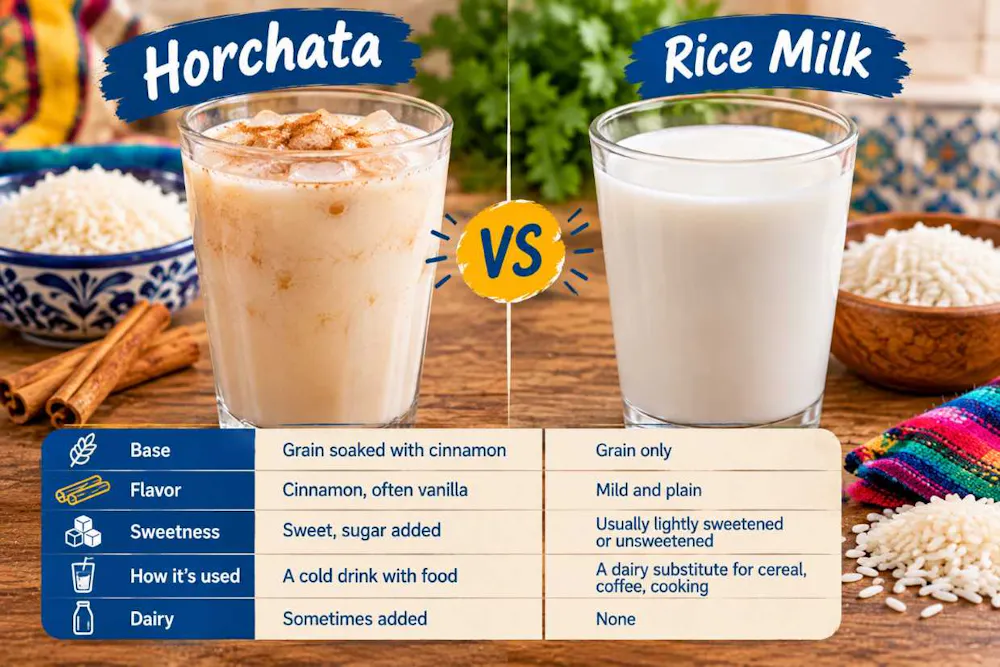
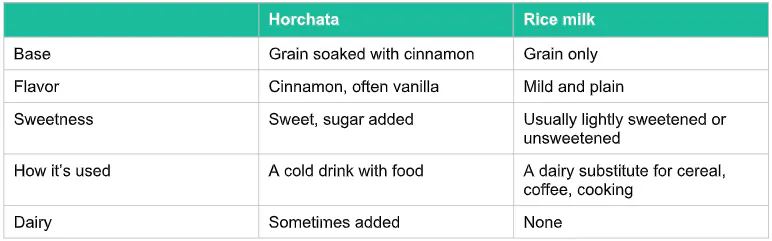
A good way to think about it: rice milk is the plain bread, and its cinnamon cousin is the cinnamon roll made from similar dough.
What is Spanish horchata?
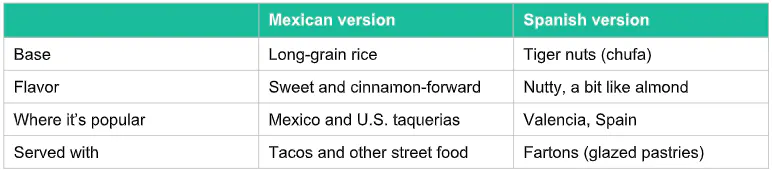
Spanish horchata, or horchata de chufa, is made from tiger nuts instead of grain. Tiger nuts aren’t actually nuts; they’re small tubers (root bulbs) from a sedge plant called chufa.
The drink is a symbol of Valencia in Spain. Visit Valencia says the chufa is grown in the farmland around the city and carries a Valencia Designation of Origin, with Alboraya known for it. There, it’s traditionally served with fartons, long glazed pastries made for dipping.
Where does horchata come from?
The drink traces back to Spain, and the version made in Mexico is an adaptation of it. The name likely comes from the Latin “hordeata,” a barley drink, according to Wikipedia and Food Network, even though neither version uses barley today.
Here’s the short history, based on the sources above:
- Islamic Spain: tiger nuts reached the Iberian Peninsula in the 8th century, per Wikipedia, and became a staple around Valencia.
- 13th century: Visit Valencia dates the earliest written mentions of tiger nut milk to the 1200s.
- Spanish colonization: the Spanish brought the drink to the Americas, where tiger nuts weren’t available.
- Mexico: cooks swapped in rice and cinnamon.
One caveat: some older history is hard to pin down. A popular legend says King James the First of Aragon named it after a taste, but Visit Valencia itself presents that story as legend, not fact.
Why do taquerias serve it?
It’s one of Mexico’s aguas frescas (fresh waters), the cold drinks that taquerias serve from big glass jars called vitroleros. Wikipedia lists the Mexican style as a well-known type of agua fresca.
It’s also one of the best drinks with tacos. The cool, sweet cinnamon flavor softens spicy salsa and balances rich meats like carne asada or adobada. It works a lot like a glass of milk after a hot curry.
Agua fresca covers a whole family of Mexican drinks, from hibiscus to watermelon, and you’ll find several of them on our menu.
Which drinks do we serve at Tacomasa?
At Tacomasa, it’s one of five refrescos on our menu. Here’s the full lineup from our current menu:
- Horchata: sweet, creamy and cinnamon-spiced.
- Jamaica: hibiscus, tart and bright.
- Pepino con piña: cucumber and pineapple.
- Sandía: watermelon.
- Piña y guayaba con limón: pineapple and guava with lime.
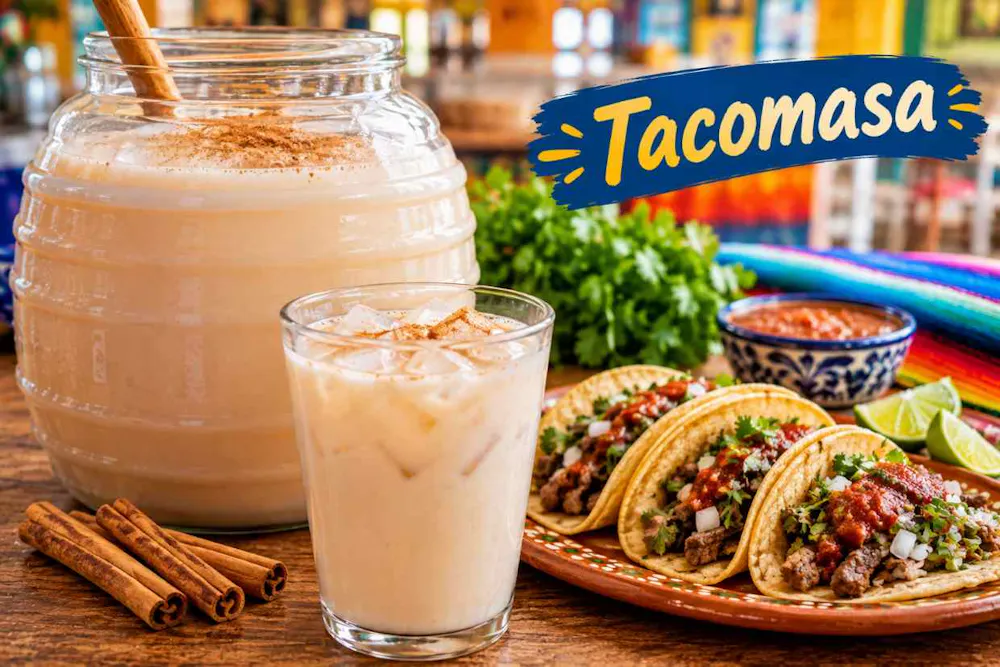
Our Taco Combo (2 tacos con todo with arroz, frijoles and a drink) is an easy way to try it. If you’re new to the phrase, our guide to what con todo means explains the toppings.
Our pick for a first visit is asada tacos with a cold cup on the side, a classic pairing of spicy salsa and cinnamon.
Not sure which taco to start with? Our post on street tacos vs regular tacos helps.
Where can you get horchata in Southern California?
You can order it at every Tacomasa location in Long Beach, Cypress, El Segundo and Brea. Find hours and addresses on our locations page.
Frequently asked questions
Is horchata alcoholic?
No. The traditional drink is non-alcoholic, made from rice or tiger nuts, water, sugar and spices. Some bars mix it into cocktails, but the version at a taqueria has no alcohol and is made for all ages, including kids.
Does horchata have caffeine?
No. The Mexican recipe uses grain, cinnamon, sugar and water, none of which contain caffeine. Some cafés blend it with espresso, and that version does. The plain cup from a taqueria is caffeine-free.
Is horchata gluten free?
Rice and cinnamon don’t contain gluten, so a simple homemade batch is usually gluten free. Packaged mixes and flavored versions can include other ingredients, though. If you have celiac disease or a gluten allergy, ask how it’s made or check the label first.
How long does horchata last?
Homemade batches are best used within a few days in the fridge. Because it’s made from soaked grain and sometimes milk, it can spoil, so keep it cold and stir before pouring. If it smells sour or separates in a way that doesn’t mix back together, throw it out.
Is horchata healthy?
It’s a sweet drink, so it’s best treated as a treat rather than a health drink. The sugar is the main thing to watch, and versions made with milk or condensed milk add fat and calories too. This is general information; if you’re managing blood sugar or a specific diet, check with your doctor or a dietitian.
What is horchata de chufa served with in Valencia?
In Valencia, it’s traditionally served with fartons, long, soft pastries with a thin sugar glaze. Visit Valencia says fartons were created in Alboraya to pair with the drink and are dipped into the glass until soaked. You can also order it as a granizada, a slushy frozen version.
The bottom line
Horchata is a sweet, creamy drink made from rice and cinnamon in Mexico and from tiger nuts in Spain. It started in Valencia, crossed to the Americas and became one of the best-loved Mexican drinks at any taqueria.
Our advice is to order it with your first round of tacos and let the cinnamon cool down the salsa. You’ll find it with the rest of our refrescos on the Tacomasa menu.