
What Is Tripa? Crispy Tripe Tacos Explained

what you need to know
- What is tripa? It’s beef small intestine, cleaned, boiled until tender, then griddled or fried until crisp and chopped for tacos.
- Tripa vs tripe: in English, “tripe” usually means stomach lining (the honeycomb kind in menudo). At a taqueria it means small intestine, a different cut.
- Taste and texture: savory and rich, crisp outside and soft inside when it’s cooked right.
- Two styles: suave (soft) or dorada (golden and crispy). Many taquerias will cook it the way you ask.
- At Tacomasa, you can get it in tacos, burritos, mulitas, vampiros, tortas, quesadillas and fries.
Last updated: November 3, 2026. Written by the Tacomasa team.
It’s the taco regulars order without looking at the menu, and the one first-timers point at and ask, “What’s that?” The short answer: crispy beef small intestine. The longer answer is why it has such a loyal following.
If the word “intestine” makes you hesitate, stick with us. Here’s what it is, how it’s cooked, how it tastes and how to order it.
What is tripa? It’s beef small intestine, a cut of offal (the organs and other parts outside the main muscle). At a taqueria, it’s cleaned, boiled until tender, then griddled or fried until crisp, chopped, and served in tacos with onion, cilantro, salsa and lime.
What is tripa, exactly?
It’s the small intestine of cattle, and Tasting Table explains that it’s usually beef, but sometimes pork or goat. You’ll also see it called tripitas, the same meat with a friendlier name.
It belongs to the same family as other organ meat on a taqueria menu, like lengua (tongue). The difference is texture. Tongue is a muscle that turns soft and buttery, while intestine is a thin tube that can turn crunchy.
Think of it like the difference between a pork chop and pork rinds. Same animal, but one cut is built for tenderness and the other is built for crunch.
Tripa vs tripe: what’s the difference?
The main difference is the part of the animal. The taqueria cut is small intestine, while tripe, in English, usually means stomach lining from cattle.
Food Network describes tripe as the edible lining of a cow’s stomach, including the honeycomb kind used in menudo.
L.A. TACO puts it from the other side: the tripas meat at a taco stand is the small beef intestine, not the gummier tripe in menudo.
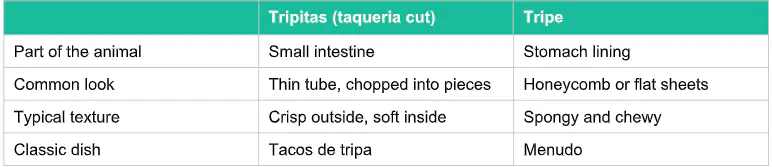
Here’s the confusing part. Menus and translation apps often label it “beef tripe,” and even Spanish speakers use the words loosely. In Portugal, Wikipedia notes, the same word means beef stomach. At a Mexican taqueria, it means intestine.
How is tripa cooked?
It’s cooked in two stages: boiled until tender, then crisped on a hot surface. Getting both stages right is what separates a great taco from a rubbery one.
- Clean it. The intestine is rinsed and scraped. Tasting Table notes that cooks often use coarse salt and vinegar.
- Boil it. It simmers with onion, garlic and salt until tender. Tasting Table puts this at 30 minutes to an hour.
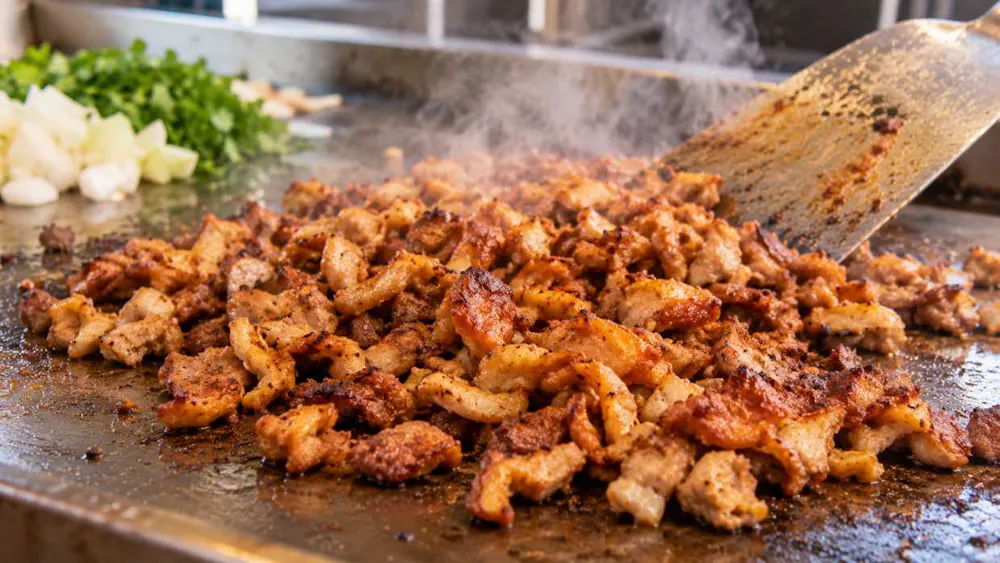
- Crisp it. It goes onto a plancha (a flat-top griddle) or into a disco, a wide, shallow pan, to fry in its own fat.
- Chop and serve. It’s cut into bite-size pieces and piled onto a warm corn tortilla.
Wikipedia notes that once the water boils off, the intestine fries in its own fat. That’s what gives griddled meat like this its deep, toasty flavor, and it’s the heart of plancha cooking at a taqueria without much added oil.
What is crispy tripa, and what is tripa suave?
Crispy tripa, often called tripa dorada (golden), is cooked longer on the plancha until the outside crackles. The suave (soft) version comes off sooner, so it stays tender with a slightly chewy texture.
Wikipedia describes three levels a cook can aim for:
- Soft: velvety and slightly firm.
- Medium crispy: a crisp outside with a soft center.
- Extra crispy: crunchy all the way through.
We’ll be straight with you: if it’s your first time, order it crispy. Crunch is the friendliest introduction, and it’s the texture most people fall for. Once you’re hooked, try it suave to taste the difference.
What does tripa taste like?
It tastes rich, savory and meaty, a little like the crispy bits at the edge of a roast. Tasting Table describes a slightly bittersweet note similar to sweetbreads, with a milder flavor and less chewiness than tripe.
The texture does most of the talking. Cooked crisp, it eats like crispy tacos made with chicharrón: crunchy edges, a soft center and a lot of savory fat.
One honest caveat: intestine that’s rushed in the cleaning stage can taste musky, and L.A. TACO points out that careful prep gives a deeper, cleaner flavor. If your first bite somewhere wasn’t great, blame the shop, not the cut.
Where are tacos de tripa popular?
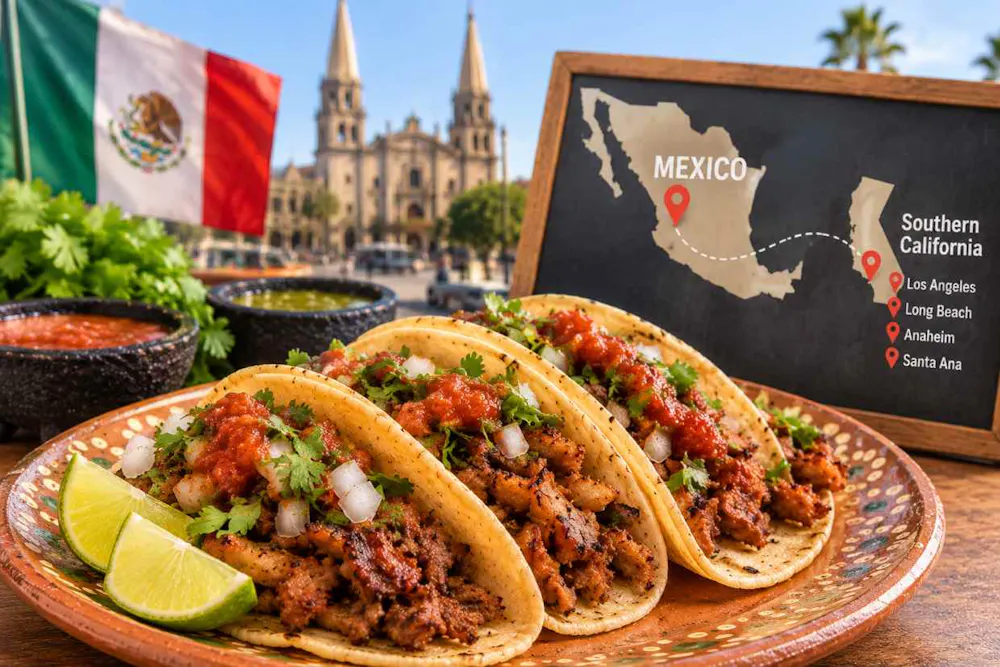
Tacos de tripa are popular across Mexico and throughout Southern California. Wikipedia names Mexico as their home, and they’re a fixture of Mexican street food alongside other offal tacos.
Jalisco is one of the places with a strong tradition. In Guadalajara, Jalisco’s capital, Grupo Animal reports that Tripitas Don Ramón has served these tacos since 1970, with intestine as its specialty.
Closer to home, L.A. TACO’s guide to tripitas includes spots in Long Beach, Anaheim and Santa Ana. In other words, Southern California takes this taco seriously.
How do we serve it at Tacomasa?
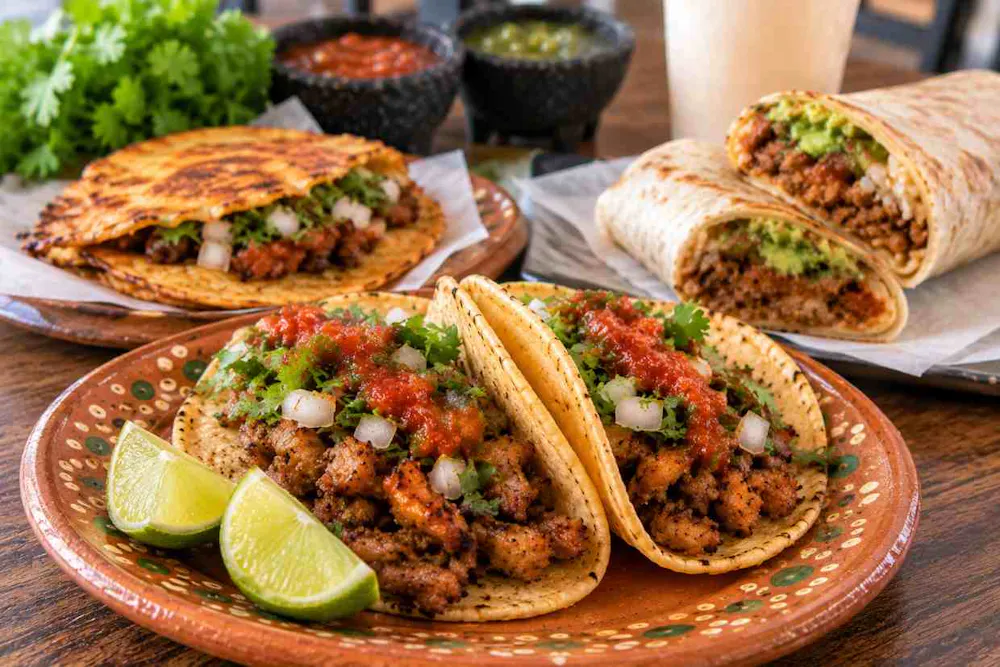
At Tacomasa, it’s one of our six meat choices, and you can order it in almost every format we make. Everything below comes from our current menu:
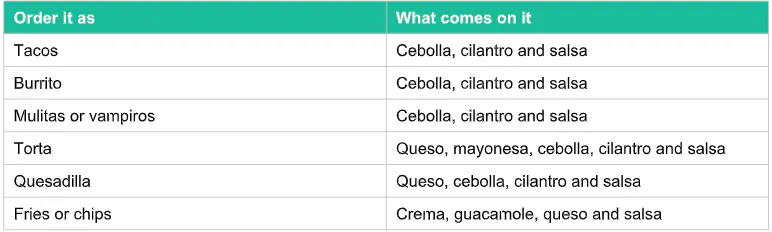
Notice there’s no guacamole on most of these. Our menu serves tripa and lengua con todo without guac, with fries as the exception. If the phrase is new to you, our guide to what con todo means covers every topping.
A squeeze of lime is the finishing touch. The acid cuts through the richness the same way lemon works on fried fish.
How should first-timers order it?
Order two tacos, crispy, with onion, cilantro, salsa and lime. Keep the rest simple so you taste the crunch.
- Pair it with a meat you know. One next to an asada taco makes the comparison easy.
- Try it in a vampiro. A crunchy tortilla plus crispy intestine is a lot of crunch, in a good way. Our mulitas vs vampiros guide explains both.
- Go bigger in a burrito. Once you like it, a burrito gives you more per bite.
Curious about the other offal on our menu? Our explainer on what lengua is covers beef tongue, the softer side of the same tradition.
Where can you try tripa tacos in Southern California?
You can order it at every Tacomasa location in Long Beach, Cypress, El Segundo and Brea. Check hours and addresses on our locations page.
Frequently asked questions
Is tripa beef or pork?
At most Mexican taquerias, it means beef small intestine, and that’s what we serve at Tacomasa. Tasting Table notes it can also come from pork or goat, so if you’re ever unsure at a new spot, just ask “es de res?” (is it beef?) before you order.
Is tripa the same as chitterlings?
They’re close relatives. Chitterlings are pig intestines, a dish of the American South, and Wikipedia lists them as the English name for this cut. The taqueria version is usually beef and finished crispy on a griddle, so it tastes and eats quite differently.
Is tripa chewy?
It can be. The suave style is softer with a slight chew, while the dorada style is crispy. Intestine that’s undercooked, or crisped without being boiled tender first, can turn rubbery. If chewiness worries you, order it extra crispy.
Is tripa clean to eat?
Yes, when it’s prepared properly. The intestine is thoroughly cleaned, scraped and boiled before it’s crisped, and Tasting Table notes it should be cooked to a well-done internal temperature of 160°F. Reputable taquerias handle this prep before it ever reaches the griddle.
Is tripa healthy?
It’s rich and usually crisped in its own fat, so it’s best as an occasional treat rather than an everyday meal. It does provide protein, but it also carries fat and cholesterol. This is general information, not medical advice; if you’re watching cholesterol or fat, check with your doctor or a dietitian.
Do tripa tacos come with guacamole?
At Tacomasa, no. It comes con todo with cebolla, cilantro and salsa, but without guacamole on tacos, burritos, mulitas, vampiros, tortas and quesadillas. Our fries are the exception. Many taquerias keep it simple the same way, letting salsa and lime do the work.
The bottom line
Tripa is beef small intestine, boiled tender and griddled crisp, then piled on a corn tortilla with onion, cilantro, salsa and lime. It isn’t the tripe in menudo, and when it’s cooked right, it’s one of the most satisfying tacos on any menu.
Our advice is to order two crispy ones next to a meat you already know, then decide for yourself. Every way we serve it is on our Tacomasa menu.