
Red vs Green Salsa: Which Taqueria Salsa Is Hotter?

what you need to know
- Short answer: neither color is always hotter. The heat comes from which chiles go in and how many, not from red or green.
- Green (salsa verde) is usually tomatillos plus fresh jalapeño or serrano, so it’s tangy and often sneakily hot.
- Red (salsa roja) is usually tomatoes or dried red chiles like chile de árbol, so it can be mild or very hot.
- Sources disagree on which is hotter “in general,” which proves the point: ask, or taste a drop first.
- At Tacomasa, fresh sauce comes on every order con todo, and Valentina hot sauce tops the elotes in our catering pack.
Last updated: November 16, 2026. Written by the Tacomasa team.
You sit down with your tacos, and there they are: one red, one green. Which one won’t set your mouth on fire? The red vs green salsa question is one of the most common at any taqueria counter.
Here’s the honest answer, plus what’s in each one, how chiles create heat, and how to pick the right taqueria salsa for your order.
Which is hotter, red or green? Neither color is always hotter. Heat depends on the chiles inside: their type, amount and whether seeds and veins stay in. Green is often made with fresh jalapeño or serrano; red often uses dried chiles like chile de árbol. Either can be mild or fiery.
Which salsa is hotter, red or green?
If you’re wondering which salsa is hotter red or green, it depends on the recipe, not the color. Even food writers disagree on the “usual” answer.
Time Out Chicago says the green at most taquerias “usually has the most burn,” because it’s made with serrano chiles.
Visit Arizona says the opposite: red is generally hotter, though it notes there are exceptions.
Think of it like coffee. A dark roast isn’t stronger in caffeine just because it’s darker. Color tells you how it was made, not how much kick it has.
We’ll be straight with you: the only reliable test is a tiny taste on a chip or the corner of a tortilla. That’s what regulars do.
What is salsa verde made of?
Verde is a green sauce usually made from tomatillos, fresh green chiles, onion, garlic and cilantro. These are the classic green salsa ingredients:
- Tomatillo: a small, tart green fruit in a papery husk. It gives verde its tangy, almost citrus bite.
- Jalapeño or serrano pepper: the source of the heat. Serranos are usually hotter.
- Onion and garlic: savory depth.
- Cilantro: fresh, herbal flavor.
Visit Arizona describes the tomatillo as similar to a small green tomato, but less watery and more acidic. Time Out notes taquerias often simmer the tomatillos and serranos, then blend them.
Some taquerias also make a creamy green avocado salsa. It looks gentle, but don’t assume it’s mild; it can carry the same chiles.
What is salsa roja made of?
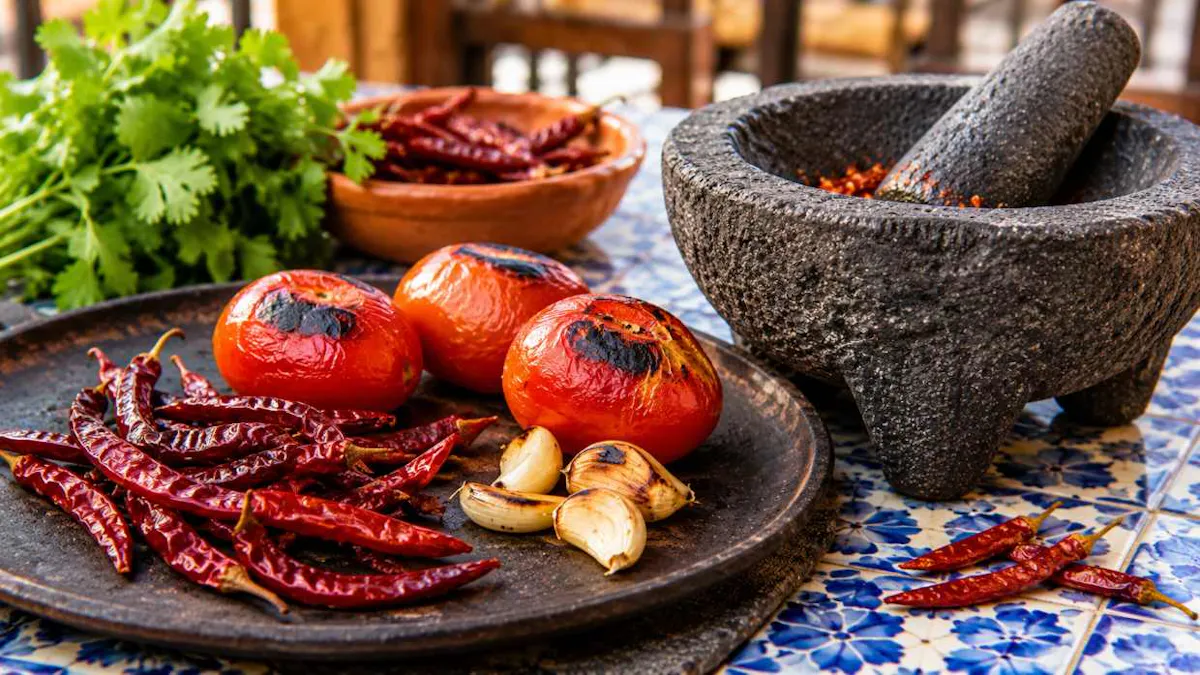
Roja is a red sauce made from red chiles, often with tomatoes, onion and garlic. Some versions use roasted tomatoes and fresh chiles; others rely mostly on dried red chiles.
Time Out says the red at taquerias is often made from rehydrated red chiles, sometimes with tomatoes. A darker red usually means charred or roasted ingredients and a smokier flavor.
One of the hottest common versions is the chile de árbol sauce. Babbel’s Mexican sauce guide rates it 4 out of 5 for heat, the highest of the everyday salsas it covers, and calls it a favorite of taco makers.
Red vs green salsa: how do they compare?
The main difference between red and green is the base: green starts with tomatillos and fresh chiles, while red starts with tomatoes or dried red chiles. Here’s how they usually stack up:
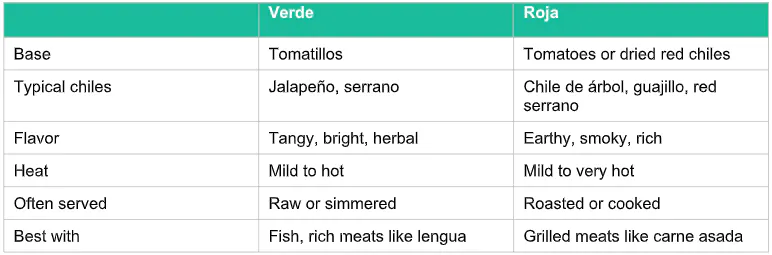
Time Out suggests green with fish tacos, since a smoky red can overpower them, and says green’s acidity balances rich cuts like beef tongue. Red’s smokiness pairs with most grilled meats.
What actually makes chiles spicy?
Every sauce gets its heat from capsaicin, the compound in chiles that triggers a burning feeling. More capsaicin means more heat, whatever the color.
Most of it isn’t in the seeds. Food Republic explains that the real source is the placenta, or pith, the pale inner rib.
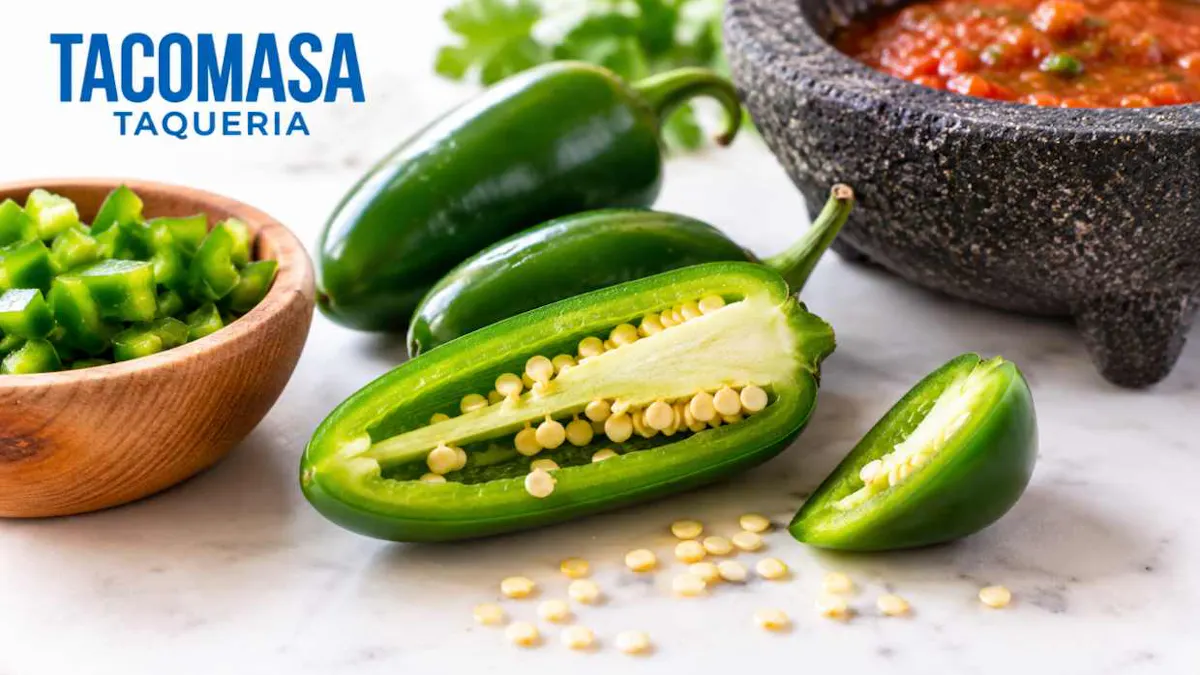
Seeds only taste hot because they sit next to it.
That’s why two batches of the same recipe can taste different. Leave in more veins, and the same jalapeño makes a spicier batch.
How hot are common taqueria chiles?
Chile heat is measured on the Scoville scale, created by pharmacist Wilbur Scoville in 1912. MasterClass’s Scoville guide notes labs now measure capsaicin with high-performance liquid chromatography (HPLC).
Here are the figures MasterClass lists for common taqueria chiles, in Scoville Heat Units (SHU):
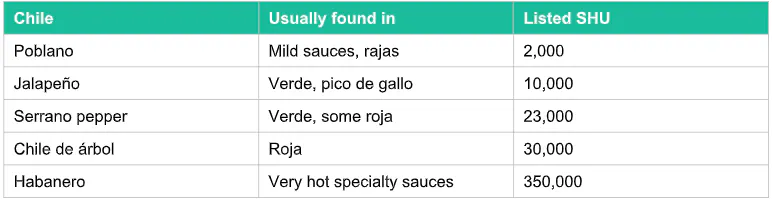
One caveat: chiles vary a lot from plant to plant, so treat these as guideposts, not exact numbers. A mild jalapeño and a hot one can be very different.
What is salsa Valentina?
Salsa Valentina is a bottled Mexican hot sauce, not a fresh table sauce. It’s thinner, tangier and milder than most people expect.
Mexico News Daily reports that Valentina is made by Grupo Tamazula, a family company from Jalisco now based in Guadalajara, using dried puya chiles.
On the Scoville scale, the classic yellow label is about 900 SHU, while the black label, made with chile de árbol, is about 2,200 SHU.
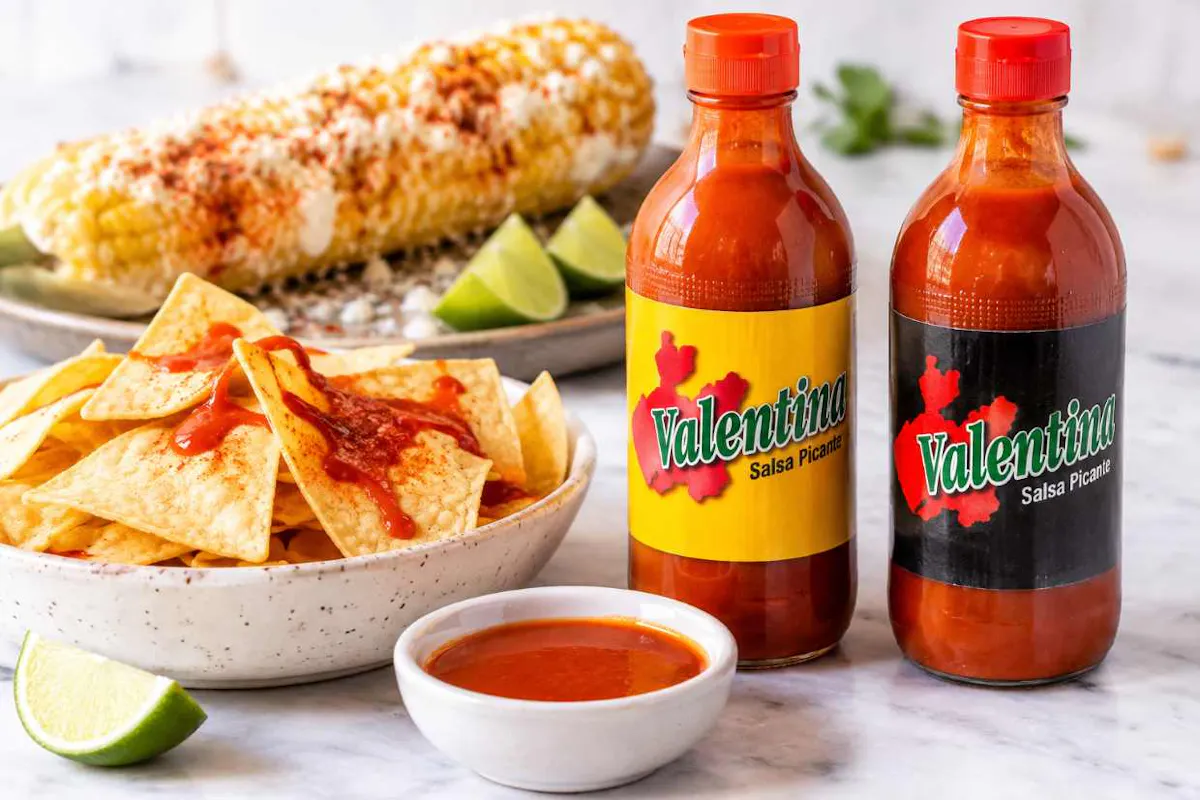
In other words, the yellow-label Valentina hot sauce is milder than a typical jalapeño. It’s about tang and flavor more than burn, which is why Mexicans splash it on chips, popcorn, fruit and street snacks.
At Tacomasa, Valentina tops the elotes in our catering pack, along with mayonesa, butter, cotija and Tajín, as listed on our current menu.
How is homemade salsa made at a taqueria?
Homemade salsa is usually made fresh daily by blending, grinding or chopping chiles with tomatoes or tomatillos, onion, garlic and cilantro. The basic method looks like this:
- Prepare the base. Roast or boil tomatoes or tomatillos until soft.
- Toast or simmer the chiles. Dried chiles are toasted and rehydrated; fresh ones are roasted or boiled.
- Grind or blend. Everything is blended smooth, or ground by hand in a molcajete.
- Season and rest. Salt, a little lime juice and cilantro go in, then the flavors settle.
A molcajete is a three-legged stone mortar, traditionally carved from volcanic basalt.
Texas Monthly’s José R. Ralat notes the name comes from the Nahuatl words for “sauce” and “cup,” and the tool goes back thousands of years.
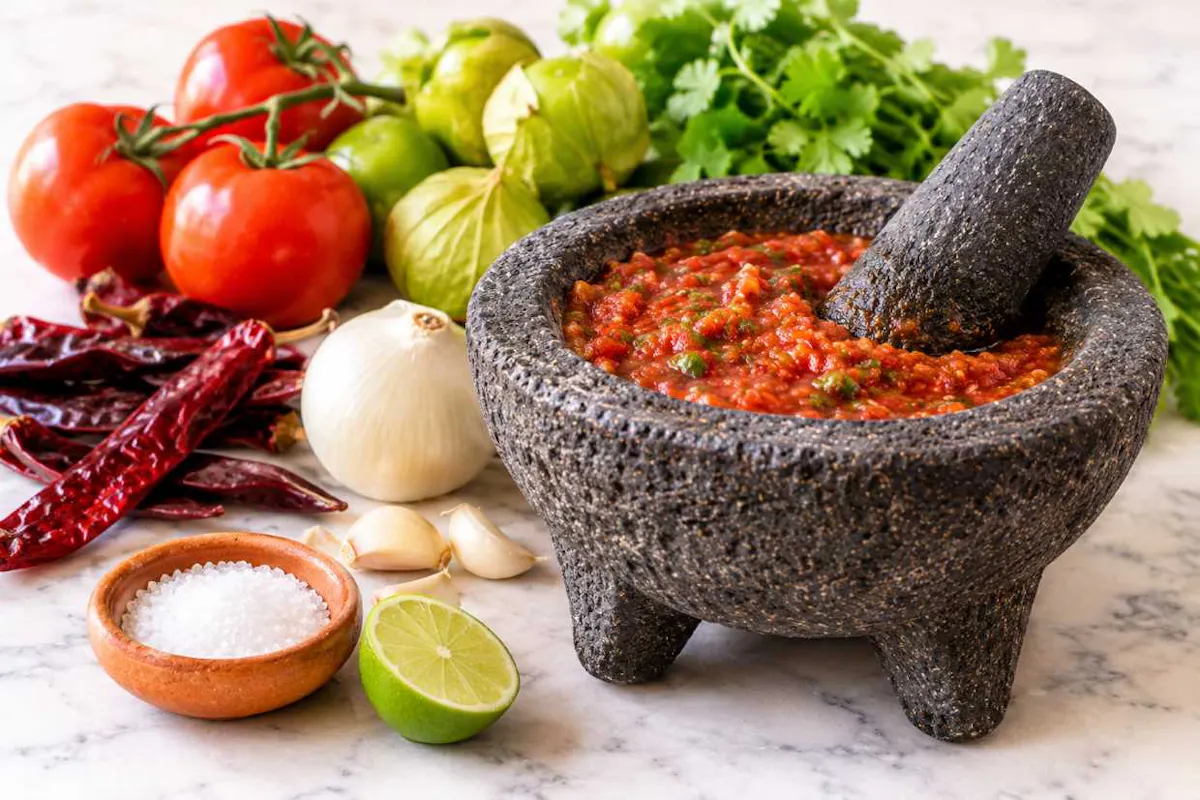
Think of a molcajete like a pepper grinder for a whole sauce. Grinding by hand gives a chunkier, rustic texture than a blender.
How do we serve it at Tacomasa?
At Tacomasa, salsa comes on every order con todo, along with cebolla, cilantro and guacamole. It’s on our tacos, burritos, mulitas, vampiros, tortas, quesadillas and fries, and comes with our chips and platters. If the phrase is new, our guide to what con todo means explains it.
If heat is a concern, ask for the sauce on the side. You still get the full flavor and control how much goes on.
How should you pick a salsa for tacos?
Pick a salsa for tacos by matching heat to your tolerance and flavor to your meat. Here’s a quick guide:
- Want mild salsa? Ask which one is gentler, or start with a few drops.
- Want spicy salsa? Look for chile de árbol or serrano, and ask the cook.
- Eating carne asada or adobada? A smoky red pairs well. Our carne asada vs adobada guide explains both meats.
- Eating lengua or tripa? A tangy green cuts the richness, as Time Out notes. See our explainer on what lengua is.
Where can you try our sauces in Southern California?
You can taste it at every Tacomasa location in Long Beach, Cypress, El Segundo and Brea. Find hours and addresses on our locations page.
Frequently asked questions
What is the difference between salsa and hot sauce?
Salsa is usually a fresh, chunky or blended sauce made from chiles, tomatoes or tomatillos, onion and herbs, and it’s eaten in spoonfuls. Hot sauce, like Valentina, is a thin, shelf-stable bottled sauce with vinegar, used a few drops at a time. Both add heat, but salsa adds flavor and body too.
How do you cool your mouth after a spicy salsa?
Reach for something cold, creamy or starchy. A sweet, milky horchata, a bite of tortilla, rice or a dab of guacamole all help. Water spreads the burn around, so it isn’t the best first choice. Our guide to what horchata is covers our favorite cooling drink.
Why do green chiles turn red?
Most green chiles are simply unripe. Visit Arizona explains that the red kind is made from ripe chiles and green from chiles picked before full maturity. As a chile ripens, it changes color and its flavor usually gets sweeter, but ripening alone doesn’t decide how hot it is.
Is pico de gallo a salsa?
Yes. Pico de gallo is a fresh, chunky sauce of chopped tomato, onion, cilantro and jalapeño or serrano with lime. Babbel’s guide rates it 1 out of 5 for heat, making it one of the mildest. It’s uncooked, so it tastes bright and crunchy rather than smooth.
Can you ask a taqueria for mild salsa?
Yes, and you should if you’re unsure. Most cooks will happily tell you which sauce is milder, or give it to you on the side. Asking is common at taquerias, and it’s the easiest way to avoid a surprise.
The bottom line
Red vs green isn’t about color. Heat comes from the chiles, the amount used and whether the veins stay in. Green is usually tangy with fresh jalapeño or serrano; red is usually earthy or smoky with dried chiles like chile de árbol.
Our advice is to taste a little first, ask the cook, and match tang to rich meats and smoke to grilled ones. Every order on our Tacomasa menu comes con todo.